The National Child Protection Authority (NCPA) has received 11,409 complaints of corporal punishment against children by February 28, 2026 — already surpassing the 10,455 complaints recorded for the whole of 2025, the agency confirmed.
The NCPA Director said complaints can be made free of charge through the child helpline 1929 and urged the public to report incidents promptly. The two-month spike has prompted the agency to push for substantive changes to Sri Lanka’s penal code rather than rely on existing administrative directives.
The NCPA is recommending several amendments. A new offence of “Corporal Punishment in Respect of Children” would cover physical force causing pain as well as non-physical humiliation, punishable by up to six months in prison and a Rs. 10,000 fine. Section 308A of the Penal Code would replace “wilfully” with “intentionally” in the child cruelty definition, and the penalties under Sections 314 and 316 for causing hurt to children would rise from two years to up to ten years for serious injuries.
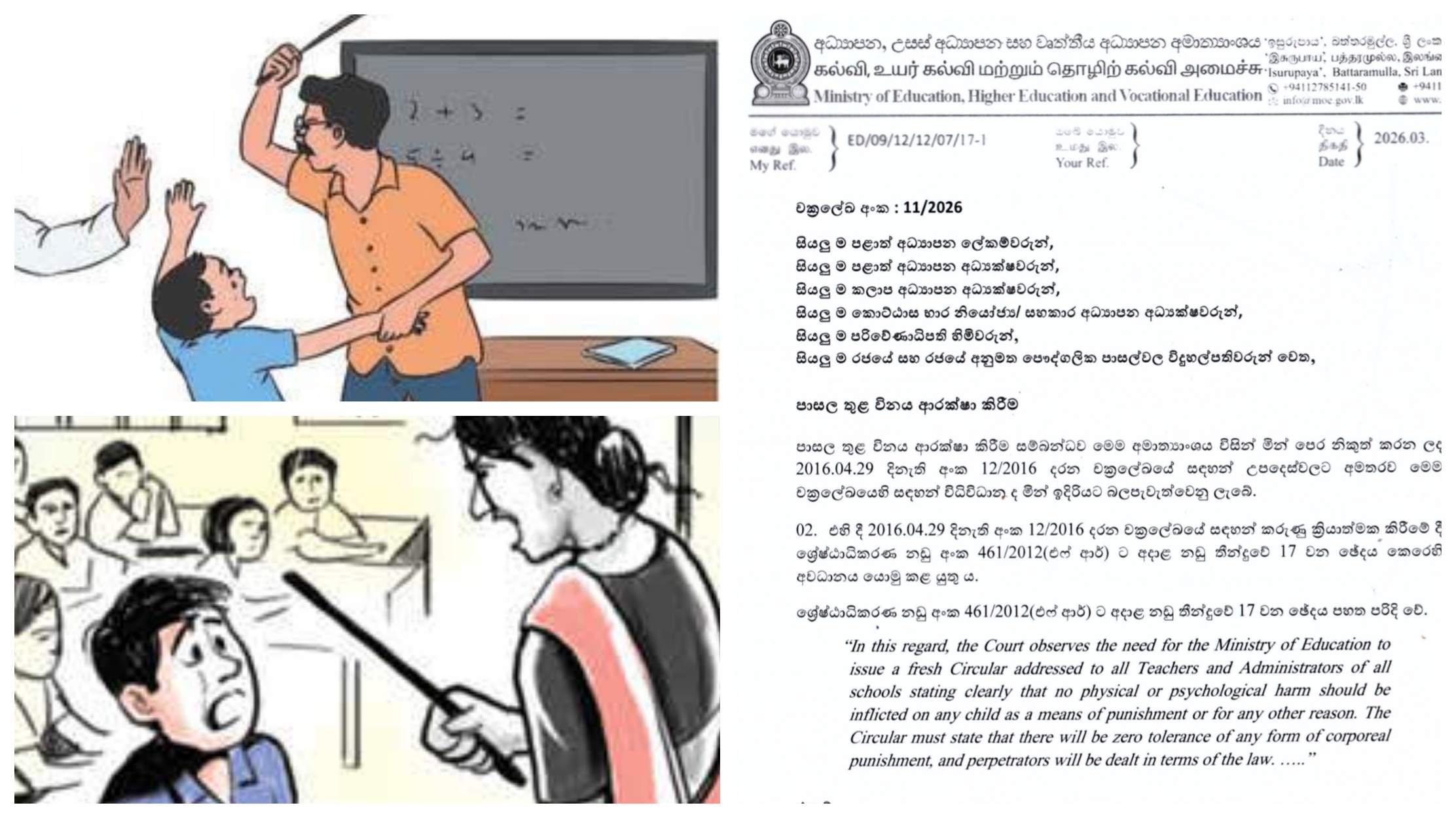
The Education Ministry separately issued Circular 11/2026 on March 30, reiterating a zero-tolerance policy on corporal punishment in schools following a Supreme Court judgment that reaffirmed the ban. Despite that, the NCPA’s data suggests enforcement on the ground remains weak.
Child rights advocates have long argued that Sri Lanka’s framework for protecting children in schools is fragmented across the Education Ministry, NCPA, and police. The proposed penal code amendments would for the first time create a stand-alone criminal offence for corporal punishment, removing the current legal grey area where teachers can still claim “reasonable chastisement” as a defence.
Marking the International Day to End Corporal Punishment on April 30, NCPA Chairperson Preethi Inoka Ranasinghe said research had clearly established the harmful effects of physical and psychological punishment on children’s personality development. “For decades, parents, elders and teachers have used various forms of physical punishment to discipline children, making it a socially and culturally accepted practice both at home and in schools,” she said. The authority noted that physical violence remains the second most reported complaint category, with 2,000–2,500 incidents recorded annually, and reiterated Sri Lanka’s obligations under Article 19 of the UN Convention on the Rights of the Child, which the country has been bound by since 1990.