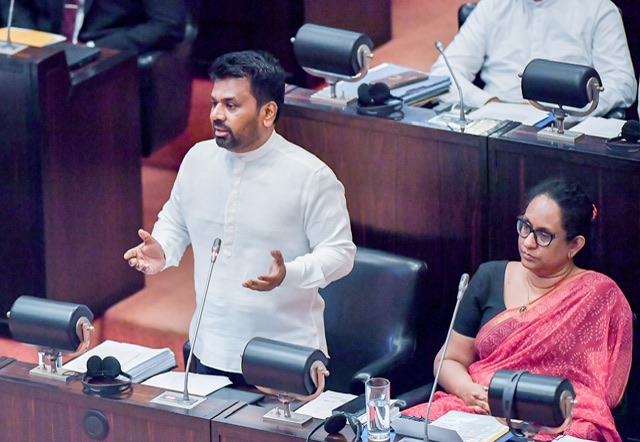
President Anura Kumara Dissanayake unveiled a Rs. 100 billion, three-month relief package in Parliament on Monday, expanding earlier-announced measures with new petrol subsidies, fertiliser shields and a one-month boost to the Aswesuma welfare allowance.
The package allocates Rs. 60 billion to fuel subsidies — Rs. 20 billion per month — covering both diesel and petrol. From May 1, motorists will receive a Rs. 100 per litre subsidy on diesel and Rs. 20 per litre on petrol, calculated against cost-reflective market prices that the government estimates could push diesel above Rs. 600 per litre. This is the first time the petrol subsidy figure has been disclosed, having been omitted from earlier announcements.
A separate fishing-sector support measure provides Rs. 50 per litre for single-day boats, capped at 25 litres per day for up to 25 days a month, while multi-day vessels receive a Rs. 150,000 lump-sum monthly allowance. The measure takes effect from April 20 and follows Cabinet approval earlier in the day.
Electricity relief is set at Rs. 15 billion, with low-consumption households using under 90 units per month receiving subsidies that offset recent tariff rises. “A portion will be borne by the government, a portion by the public and a portion by the companies involved,” Dissanayake said.
Agriculture spending includes Rs. 1.7 billion to keep urea fixed at Rs. 10,200 per bag against a market reference price near Rs. 13,500. The paddy fertiliser subsidy rises from Rs. 25,000 to Rs. 30,000, and the additional crops subsidy from Rs. 15,000 to Rs. 18,000.
Aswesuma payments will be temporarily uplifted for April only, costing Rs. 8.5 billion. The Rs. 17,500 tier rises to Rs. 25,000, the Rs. 10,000 tier to Rs. 15,000, and the Rs. 5,000 tier to Rs. 7,500.
Dissanayake said the package was a direct response to “the impact of the ongoing Middle East conflict on Sri Lanka” — a crisis that has since eased following the US-Iran ceasefire on April 8, and pledged that “we are not placing the entire burden on the public.” Cost-reflective fuel pricing using prior-month averages will start in early May, formally ending the era of fixed government-set retail prices.