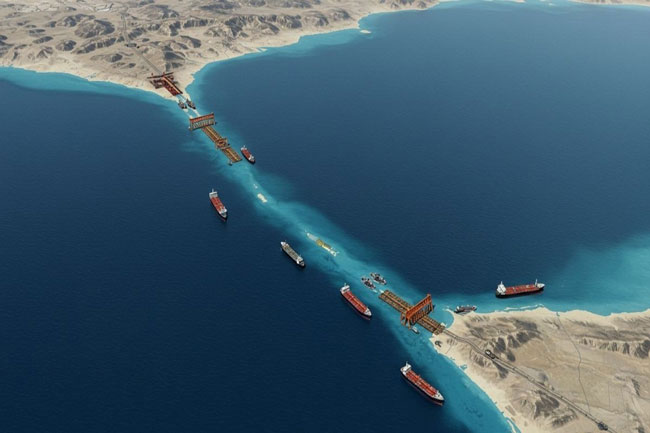
Iran’s Islamic Revolutionary Guard Corps (IRGC) has declared the Strait of Hormuz fully closed, extending the shutdown to a corridor it had previously designated for the safe passage of vessels through the strategic waterway, state media reported Saturday night.
The IRGC navy said the strait will remain sealed until the United States lifts its naval blockade on Iranian ports and ships. The military warned that any vessel attempting to transit in violation of the order would be targeted.
Just two days earlier, Tehran had announced a controlled opening under which shipping could move through the strait in coordination with Iranian authorities and against payment of a toll. That concession has now been withdrawn.
Iran considers the US blockade — still in force despite the Israel-Lebanon ceasefire agreed on April 16 — a breach of its own ceasefire with Washington. Two vessels were attacked earlier Saturday in the Strait of Hormuz and off the coast of Oman, at least one reportedly struck by Iranian gunboats.
The closure marks the most restrictive Iranian posture on Hormuz since the current crisis began, overriding Foreign Minister Abbas Araghchi’s April 17 declaration that the waterway was “completely open” and the IRGC’s subsequent April 18 downgrade to “strict management.”
For Sri Lanka, the development threatens renewed pressure on fuel and fertiliser supply chains already straining under war-risk shipping premiums. The Ceylon Petroleum Corporation has disclosed diesel premiums of $48–$50 per barrel on recent shipments, and fertiliser procurement costs have climbed from $650 to $800 per metric tonne in a single cycle.
A second round of US–Iran talks is scheduled for Monday in Islamabad under Pakistani mediation. President Donald Trump has signalled he may not extend the current ceasefire window if those talks fail to produce a deal.