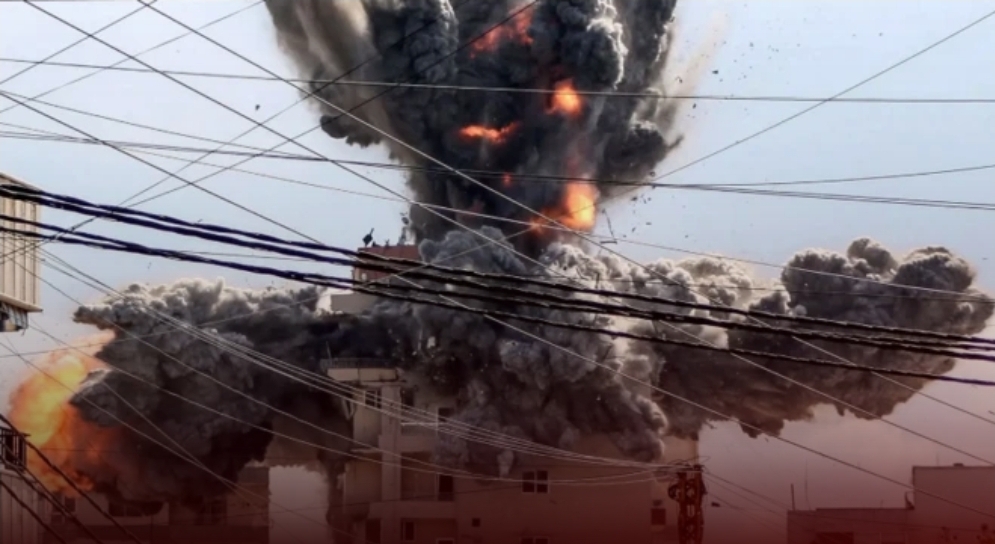
Israel launched its largest wave of airstrikes on Lebanon since the start of its current ground operation on Wednesday, killing at least 89 people and wounding more than 700, according to Lebanon’s Ministry of Public Health. The bombardment shattered the brief calm that followed the US–Iran ceasefire announced earlier the same day and prompted Iran to halt oil tanker traffic through the Strait of Hormuz once again.
The Israeli military said it struck more than 100 Hezbollah-linked targets within ten minutes across Beirut’s southern suburbs, the Bekaa Valley and southern Lebanon. Officials in Beirut said at least 12 medical personnel were among the dead and warned the toll was likely to rise as rescue teams continued to dig through rubble. Lebanese President called the operation a “massacre.”
Israel said its operations in Lebanon would continue, noting that Lebanon was not part of the US–Iran ceasefire framework. Several residential buildings and pieces of infrastructure were damaged in the strikes.
Iran’s semi-official Fars news agency reported hours later that Tehran had halted oil tanker traffic through the Strait of Hormuz, warning that ships passing without permission would be “targeted and destroyed.” A senior Iranian official quoted by Fars said Iran would “punish the Zionist regime” for what it called a violation of the ceasefire terms. The Islamic Revolutionary Guard Corps separately claimed it had targeted the USS Abraham Lincoln and USS Tripoli, forcing both vessels to retreat into the Indian Ocean — a claim that has not been independently confirmed.
The renewed Hormuz closure raises immediate concerns for global energy supply and for Sri Lanka’s already strained fuel sector, with the Sapugaskanda refinery operating on thin crude stocks and a no-confidence motion against the Energy Minister due in Parliament on April 10. Markets that rallied this morning on the ceasefire announcement now face a sharp reassessment.