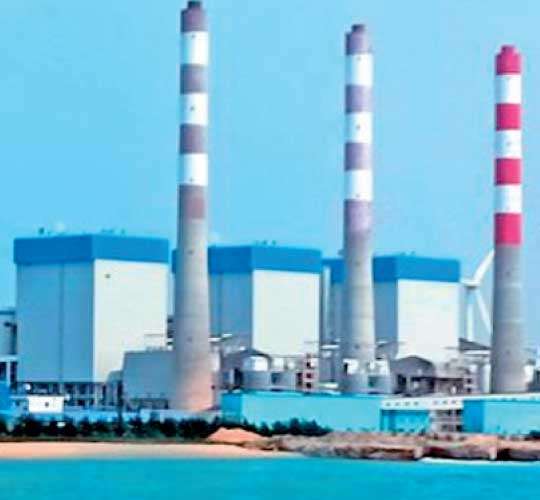
A Special Audit Report from Sri Lanka’s National Audit Department has put the direct efficiency loss from substandard coal burned at the Lakvijaya power plant at Rs. 2,237.7 million for the 2025/2026 season, with another Rs. 2,332.5 million identified as penalties recoverable from the supplier, Daily FT reported on Thursday.
The figures are the first official quantification of the financial hit from the Lanka Coal Company’s procurement of nine shiploads of coal from Trident Chemphar Ltd that failed to meet calorific value standards. The audit found that reduced fuel quality forced the plant to burn more coal per kilowatt hour of output, with estimated additional consumption of up to 114.5 million kWh depending on operating conditions.
Auditors traced the failures to breakdowns in procurement governance, supplier selection and quality controls. Lanka Coal Company failed to use a 40-day import window between 13 November and 30 December 2025 to procure a shipload of coal, and only 12 of 18 expected cargoes had arrived by March 2026. The shortfall triggered emergency procurement, including from a supplier that had previously failed to meet minimum calorific thresholds.
The audit also criticised the buyer for not verifying coal quality against loading-port reports. “Lanka Coal Company had not taken steps to avail of those options,” the report said, meaning discrepancies between supplier data and the plant’s own control-unit readings went unchallenged.
Earlier audit reports in 2016 and 2022 had flagged similar weaknesses and recommended tighter internal controls and supplier-selection criteria, the audit notes, describing the latest findings as a recurrence of long-standing problems.
President Anura Kumara Dissanayake acknowledged the coal-quality problem in Parliament on Tuesday, saying three Lakvijaya units were producing 270, 266 and 244 MW against an installed 270 MW target and that overall output had dropped to around 810 MW from a 900 MW capacity. He said the government has withheld payments, applied penalties reducing one supply price from $98 to $64 per tonne, and warned of legal action.
The audit’s Rs. 2.24 billion direct loss sits inside a broader Rs. 32 billion three-month fallout that the President laid out in Parliament, with alternative diesel-fired generation and tariff pressure driving most of the gap. The findings were presented to Parliament hours before Friday’s no-confidence motion against Energy Minister Kumara Jayakody, tabled by the SJB and UNP over the Lakvijaya procurement scandal.