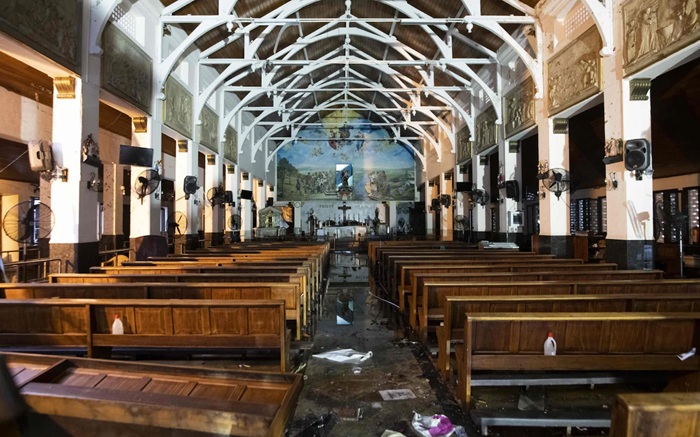
Public Security Minister Ananda Wijepala told Parliament on Thursday that investigations have established the April 2019 Easter Sunday bombings were not an isolated terrorist incident but part of a wider conspiracy that dates back to 2017.
Speaking during the thirteenth parliamentary debate on the attacks, Wijepala said the country will mark seven years since the bombings on April 21 this year. He said a large number of cases arising from the investigation remain before the courts, and that certain details cannot yet be publicly disclosed because of active judicial proceedings.
The minister said investigators had concluded that the Easter attacks formed part of “a series of events” rather than a standalone act, and that the chain of planning can now be traced as far back as 2017 — two years before the bombings at three churches and three luxury hotels killed more than 260 people.
The claim deepens the political and legal stakes around former State Intelligence Service chief Suresh Sallay, arrested in February under the Prevention of Terrorism Act over his alleged role in the Easter bombing conspiracy. Sallay’s next court appearance is on April 22. A separate parliamentary push to reopen the record of pre-attack intelligence warnings is also under way, with former minister Udaya Gammanpila recently alleging an “IS link” missed by investigators in a press briefing ahead of the seventh anniversary commemoration.