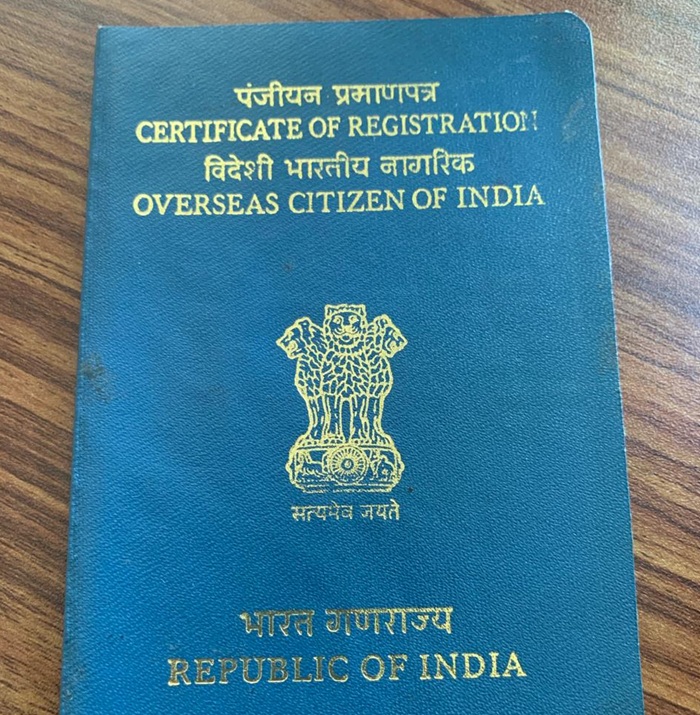
India has extended Overseas Citizenship of India (OCI) card eligibility to the fifth and sixth generations of Indian-origin Tamils (IOTs) in Sri Lanka, a move that significantly broadens access for the upcountry plantation community.
The expansion was announced by Indian Vice President C. P. Radhakrishnan at a community reception in Colombo attended by around 1,000 members of the Indian diaspora. Eligibility had previously been capped at the fourth generation, leaving many descendants of estate workers unable to apply.
Alongside the generational extension, the Vice President said the OCI application process would be simplified. Certificates issued by the Government of Sri Lanka — including certificates of registration, India–Sri Lanka passports, and records maintained at the High Commission of India in Colombo and the Assistant High Commission in Kandy — will now be accepted as proof of nativity.
The High Commission of India in Sri Lanka described the decision as fulfilling a long-standing request of the diaspora, with estate workers and their families cited as the primary beneficiaries. Most Indian-origin Tamils in Sri Lanka descend from labourers brought by British colonial planters in the 19th century, many of whom lost their citizenship under the 1948 Ceylon Citizenship Act and were later granted Sri Lankan citizenship in stages.
The OCI announcement was among the key deliverables of Radhakrishnan’s two-day bilateral visit to Sri Lanka from April 19–20, the first by a sitting Indian Vice President. During the trip he also inaugurated the third phase of the Indian-funded housing project handing over 145 homes to estate workers and addressed the plantation Tamil community in Nuwara Eliya.
Radhakrishnan was accompanied by Minister of State Prof. S. P. Singh Baghel and Members of Parliament Dr. K. Laxman and Dr. Medha Vishram Kulkarni.