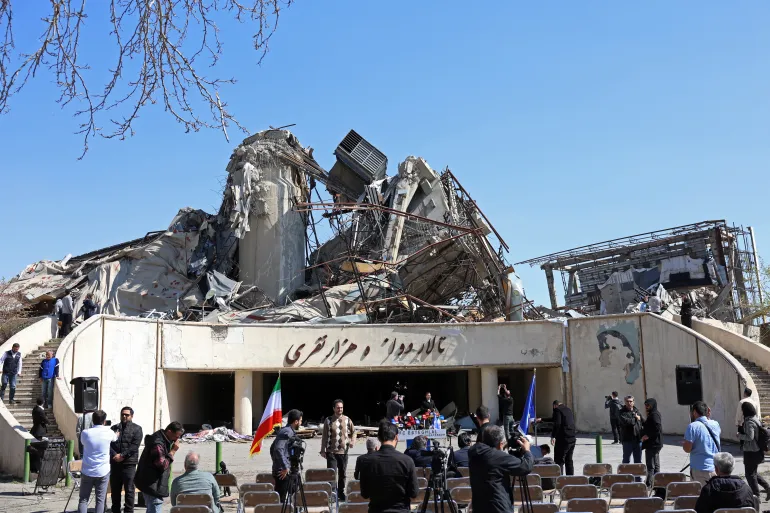
The US-Iran conflict escalated sharply on Friday as Iran claimed to have downed two American military aircraft, while Pentagon figures revealed the growing human cost of the war.
Iranian forces said they struck an F-15 fighter jet over southwestern Iran, destroying it completely, and hit an A-10 aircraft near the Strait of Hormuz that crashed into the Gulf. One crew member from the F-15 was rescued by US forces, but a search continues for the second. The A-10 pilot was reported safe after the crash.
Iranian state media broadcast wreckage photos and ejection seat imagery from the F-15 as evidence. Parliament Speaker Mohammad-Bagher Ghalibaf mocked Washington’s military claims, citing the ongoing pilot search as proof the conflict had moved beyond regime-change ambitions.
President Trump dismissed the incidents as a normal feature of combat. “No, not at all. No, it’s war. We’re in war,” he said when asked if the losses would affect peace talks.
Rising Toll
The Pentagon confirmed 365 US service members have been injured since hostilities began — 247 Army, 63 Navy, 36 Air Force, and 19 Marines. Thirteen service members have been killed in action.
Separately, Iran executed two convicted members of a banned opposition group, signalling intensified domestic crackdowns alongside the external conflict.
Sri Lanka Impact
The escalation compounds Sri Lanka’s energy crisis. Fuel prices have risen approximately 33% since the war began disrupting supplies through the Strait of Hormuz. Israel’s strike on Iran’s South Pars petrochemical complex on April 6 pushed oil prices to $108/barrel, while Iran has since demanded war compensation before reopening the strait — making the closure indefinite. QR-based fuel rationing remains in force, schools operate on four-day weeks, and the public sector has curtailed operations. Any prolonged conflict threatens the fuel supply Sri Lanka secured for April and May.