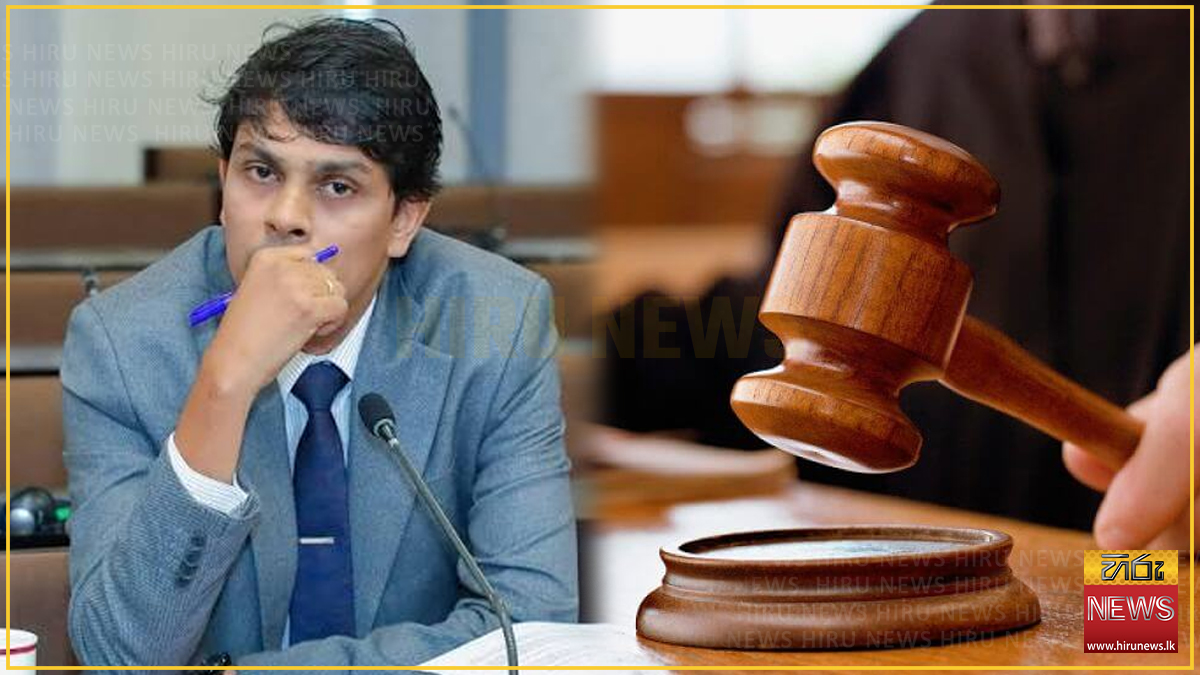
The Colombo High Court has ruled that charges filed under the Prevention of Terrorism Act (PTA) against Nadun Chinthaka Wickramaratne, alias “Harak Kata”, and four other defendants cannot be maintained before court.
The indictments had alleged that the accused conspired to arrange Wickramaratne’s escape while he was being held in the custody of the Criminal Investigation Department under detention orders.
The court held, however, that when the nature of the offences alleged against the accused was considered, there was no legal impediment to proceeding with the charges filed against them under the Penal Code. The prosecution’s case therefore continues, stripped of its terrorism-law component.
The order was issued by Colombo High Court Judge Buddhika C. Ragala after he upheld preliminary objections raised by President’s Counsel U.R. de Silva, Attorney-at-Law Jaliya Samarasinghe and other lawyers appearing for the defendants.
Context
Wickramaratne is among Sri Lanka’s most widely reported organised-crime figures. He was arrested in Madagascar and returned to Sri Lanka, after which he was held under CID detention orders before being transferred to the Boossa high-security prison.
His time in CID custody has generated a series of separate legal proceedings. Investigators from the Commission to Investigate Allegations of Bribery or Corruption have alleged in a distinct case that three suspects demanded a large payment while claiming they could influence official decisions affecting him — including lifting his detention orders and moving him out of Boossa. That case, in which Rakitha Rajapakshe and two co-accused were granted bail this week, remains before the Colombo Chief Magistrate’s Court.
The PTA has long been contested in Sri Lanka, where successive governments have faced domestic and international pressure over its detention provisions and its use in cases outside the political violence it was drafted to address. Thursday’s ruling turns on whether the alleged escape conspiracy falls within the Act’s scope rather than on the facts of the allegation itself.
None of the allegations against the accused has been proven, and the Penal Code charges remain to be tried.