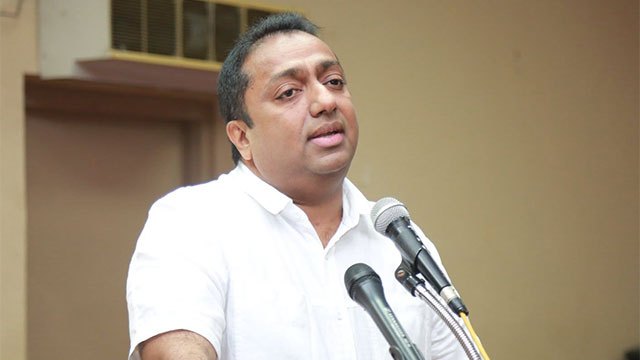
The government will keep prioritising investment in education despite Sri Lanka’s economic difficulties, Additional Secretary to the Prime Minister A.B.M. Ashraf said on Wednesday, arguing the country’s future rests on developing its human capital.
Ashraf was speaking at a ceremony where 50 Lenovo laptops were distributed to high-performing G.C.E. Advanced Level students.
“We may have faced financial difficulties and even bankruptcy, but we have never considered reducing investment in education,” he said. “Instead, we have increased it because our future depends on our children.”
Spending on education, health and human development was never cut even at the worst of the crisis, he said.
Connecting every school
Ashraf said the commitment would be carried forward through a nationwide digital transformation programme, under which all 10,000 schools in Sri Lanka are expected to be connected to the internet.
Schools will be linked primarily through fibre networks. Where fibre is not commercially viable, 4G, 5G and satellite technology will be used instead.
The government also plans to upgrade local area networks, improve computer laboratories and ensure every secondary school is digitally connected.
The gaps that remain
More than 1,500 secondary schools, mainly in remote and underserved areas, still have no computer laboratory, Ashraf said. Those schools are to receive fully equipped labs next year, including computers, networking facilities and furniture.
He said the government has already met its target of providing at least one digital classroom to each of Sri Lanka’s roughly 6,200 secondary schools. Around 2,500 schools previously had no digital board at all.
More than 500 schools that had no functioning computers, along with about 100 divisional education offices, were supplied with working equipment last year.
Sources: Daily Mirror.