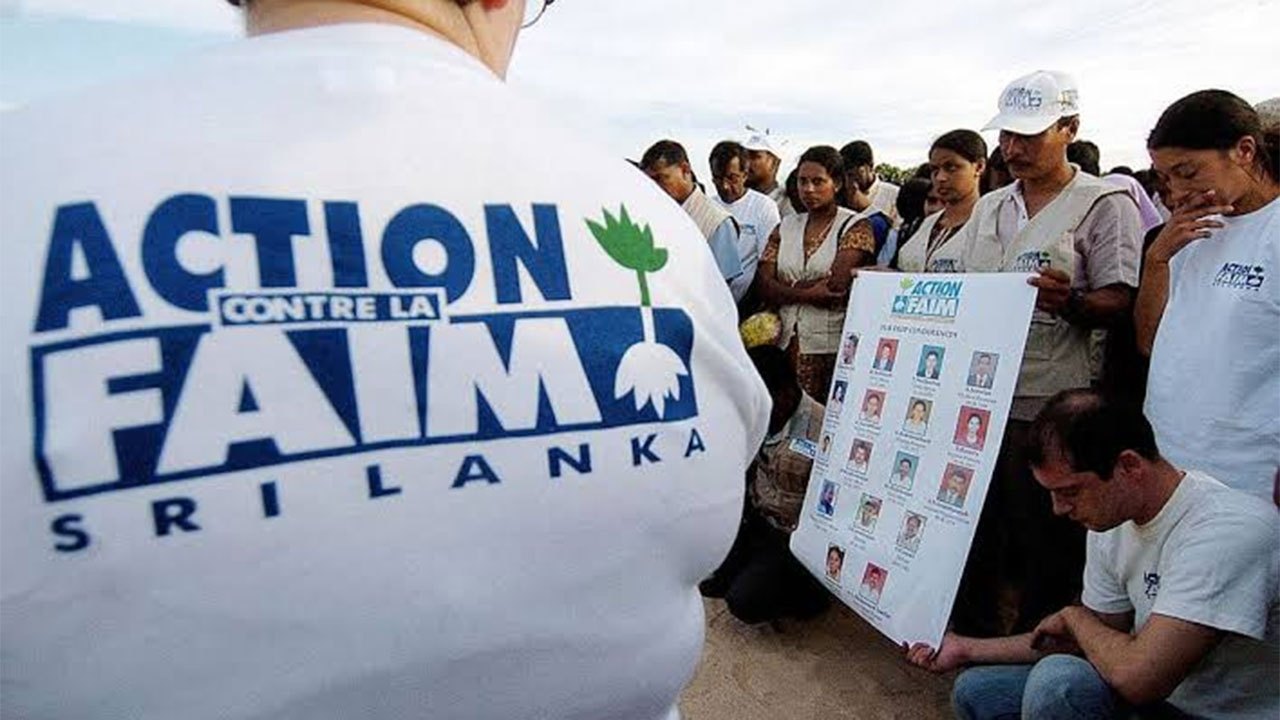
UN experts have called on the Sri Lankan government to deliver truth, justice and reparation without further delay to the families of 17 humanitarian workers killed in Muttur two decades ago.
On 4 August 2006, amid intensifying fighting between the Sri Lankan Army and the Liberation Tigers of Tamil Eelam, 17 Sri Lankan staff of the French NGO Action Against Hunger were found executed at their compound in the Trincomalee district town, most with gunshot wounds to the head. The organisation was the only international NGO still providing water, sanitation and hygiene services to the local population at the time.
“The victims were not combatants. They were humanitarian workers providing life-saving assistance to civilians caught in armed conflict,” the experts said in a statement.
Two decades without a prosecution
Successive international investigations concluded there are reasonable grounds to believe members of Sri Lanka’s security forces were responsible, including the OHCHR Investigation on Sri Lanka published in 2015.
Domestic commissions of inquiry, the experts said, were marred by evidentiary failures, inadequate witness protection and political interference — including the 2008 withdrawal of the International Independent Group of Eminent Persons overseeing the process, which cited a “lack of political will” to pursue accountability.
“Nearly 20 years later, those responsible have still not been arrested, prosecuted or punished,” they said. “This enduring impunity has prolonged the suffering of victims’ families and undermined confidence in the rule of law.”
The wider cost
The experts said the killings had direct and foreseeable consequences for more than 325,000 displaced people in the area. Disruption to well rehabilitation work, the Kantalai water treatment plant, food distribution and agricultural support increased exposure to unsafe drinking water, malnutrition and water-borne disease.
More than 2,000 aid workers left the Northern and Eastern provinces in the months after the attack, and humanitarian space continued to shrink until the conflict ended in 2009.
The families’ two decades of waiting, threats and displacement “may amount to cruel, inhuman or degrading treatment in itself,” the experts said.
They urged Sri Lanka to open or reactivate a prompt, independent and impartial investigation, provide comprehensive reparation, and guarantee protection for those wishing to mark the 20th anniversary. The experts said they are in contact with the government on the matter.
Sources: Ada Derana.