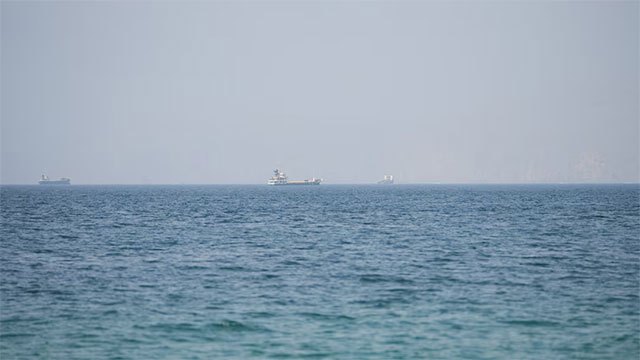
Iran said it is nearing a final agreement with Oman defining new shipping lanes through the Strait of Hormuz, but repeated that the United States must meet a separate set of conditions — compensation, an end to sanctions and an end to military threats — before the waterway reopens.
Foreign Minister Abbas Araqchi said on Sunday that the agreement with Oman was in its “final stages”, restating comments made a day earlier that Tehran would not reopen the channel unless Washington met its demands. The deal would set out the lanes to be used once those conditions are fulfilled and the strait is reopened, Iran’s Mehr news agency quoted him as saying, according to a Reuters report carried by Ada Derana.
A US official told Reuters on Friday that Iran and Oman were close to a deal that could pave the way for restoring safe passage. “Once the deal is announced to restore commercial shipping without impediments, the United States will lift the blockade of Iranian ports,” the official said, adding that US actions would be tied to Iran’s implementation of its commitments.
The list of demands
Araqchi said reopening would depend in part on the US paying compensation for damage caused in its attacks on Iran. Mohammad Baqer Zolqadr, secretary of Iran’s top national security body, set out a broader list: an end to further US threats, a halt to aggression against Iran and its Lebanese, Palestinian, Yemeni and Iraqi allies, removal of the US naval blockade in the Gulf, the lifting of sanctions, and the release of frozen Iranian assets.
There are no direct talks. Araqchi said Tehran will not begin them while Washington is in breach of an interim deal signed in June, and that messages are being passed through intermediaries.
President Donald Trump told Axios the US was “low-keying” it. “We are only semi-negotiating with them. We are just watching Iran with its huge inflation and the fact they have no money,” he said.
Sources told Reuters the emerging arrangement appeared set to give Tehran control over vessel traffic entering the Gulf through the strait — something shippers have said is not easily workable. Iran blocked Hormuz in response to US and Israeli attacks that began in late February. A ceasefire was agreed in June, but the US reimposed a blockade on Iranian shipping in the Gulf in July, which Tehran said violated a truce that had by then already broken down.
The United Arab Emirates said on Saturday that Iran had attacked a ship affiliated with its state oil company. There was no immediate Iranian comment.
Second front on the Red Sea
Iran’s Yemen-based allies, the Houthis, said they attacked Saudi Aramco’s Jazan refinery on Sunday. Saudi Arabia’s energy ministry said a fire broke out at the facility but was later extinguished with no injuries, and that authorities were dealing with the incident without giving a cause.
Houthi military spokesman Yahya Saree said the refinery was hit by a drone and that “the strike was precise”, Al Jazeera reported, describing it as retaliation for Saudi drone incursions into the airspace of Saada and Hajjah provinces. Hiru News reported that Saudi authorities confirmed the blaze had been fully brought under control. Al Jazeera also reported that a Yemeni military spokesperson said seven people were killed in a separate Houthi attack on the port of al-Makha.
The strike came two days after Saudi Arabia signed a joint defence pact with Turkey and Pakistan in Mecca. Turkish Foreign Minister Hakan Fidan said the alliance was not directed against Iran or any other country but was a general pledge to support security. The Houthis declared a naval blockade against Saudi Arabia in the Red Sea last month, in response to what they called a Saudi siege in Yemen — an allegation Riyadh denies.
Why it matters for Sri Lanka
About a fifth of the world’s oil and gas shipments crossed Hormuz before the war. Sri Lanka imports effectively all of its crude and refined fuel, leaving it exposed to freight and insurance costs on the route — pressure that has run through this year’s coverage, from Iran and Oman agreeing route coordinates to Saturday’s report that a deal was close but would not by itself reopen the strait.
Sources: Ada Derana, Al Jazeera, Hiru News.