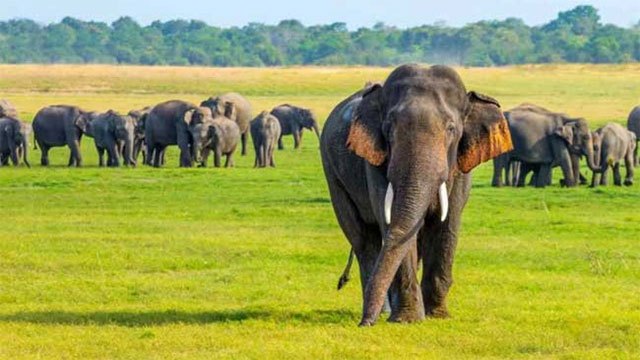
Residents of several areas around Mahiyangana staged a torch-lit protest on Monday night accusing the government of neglecting the threat posed by wild elephants, as Sri Lanka marked World Elephant Day on Wednesday.
The protest drew people from Rideemaliyedda and the Nagadiwa Scheme, the Daily Mirror reported. Demonstrators said government leaders had promised to resolve the human-elephant conflict within six months of taking office but had not acted, though nearly two years have passed.
They said herds raid their villages and destroy cultivated land, leaving them in constant fear for their lives, and that they intended the protest as an eye-opener for the government.
A death the day before the observance
Police have begun investigating the death of a 43-year-old man in an elephant attack at Ambanpola on Tuesday evening, Ada Derana reported. The victim, a resident of the area, was attacked while trying to drive wild elephants out of his paddy field.
The figures being cited
Hemantha Withanage, chairperson of the Centre for Environmental Justice, told Ada Derana that more than 400 elephants are killed annually in Sri Lanka and nearly 200 people die each year in the conflict. He said 180 elephant deaths and 56 human deaths have been recorded so far this year, of which around 75 elephant deaths were caused by human activity — roughly 30 by gunfire, 23 by electrocution and 19 by the improvised jaw bombs known as “hakka patas.”
Those figures are identical to the Department of Wildlife Conservation’s count for the first seven months of 2026, published in mid-July. The numbers appear to be the same mid-year dataset re-cited for the observance rather than an updated August count, and readers should not read them as a fresh tally.
Withanage also questioned population estimates, noting that while earlier figures put the wild elephant population at around 5,000, a recent wildlife survey indicated it had passed 7,000. He said the conflict continues to intensify as people and elephants occupy more than 40 percent of the country’s land area, and called for a systematic programme proposed by his organisation to be implemented.
Official messaging
The Ministry of Environment said in a statement that elephants play a vital role in maintaining ecosystems and biodiversity but face growing threats from human activity, and that years of unplanned development have obstructed elephant corridors and traditional migration routes.
The Daily Mirror marked the day with a call to protect elephant habitats and promote coexistence, describing the animals as part of the country’s natural heritage.
Sri Lanka has one of the world’s highest rates of human-elephant conflict. The government adopted a national action plan on the conflict last year, including corridors and fencing, but deaths on both sides have continued.