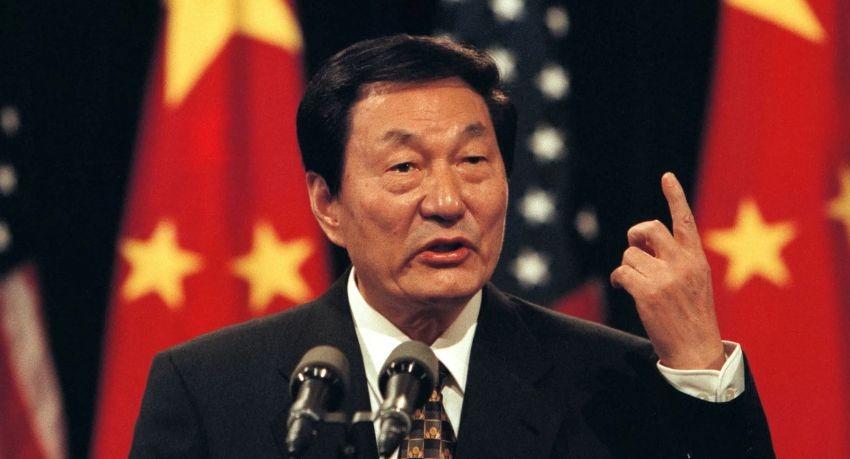
Zhu Rongji, the blunt-spoken technocrat who ran China’s economy through its most consequential decade of reform, died of illness in Beijing on Wednesday morning at the age of 97, state news agency Xinhua reported.
Zhu served as premier from 1998 to 2003, after managing economic policy as a vice premier from 1991 under then-leader Jiang Zemin. He sat on the Politburo Standing Committee of the Communist Party’s 14th and 15th Central Committees.
Reform and its costs
Known at home as China’s “economic czar” and the “iron-fisted premier”, Zhu pushed through an overhaul of the tax and fiscal system, brought rampant inflation under control and held the economy steady through the 1997 Asian financial crisis.
His restructuring of bloated state-owned enterprises was the most painful of those measures, costing an estimated 40 million workers their jobs. He was best known internationally for negotiating China’s accession to the World Trade Organization in 2001, a step critics accused him of buying with excessive concessions, and which preceded years of double-digit growth.
The Communist Party’s official obituary credited his role at a “crucial stage” as the country moved “from a planned economy to a socialist market economy”.
A rare plain speaker
Zhu was unusual among senior Chinese officials for saying what he thought. A four-volume collection of his speeches published in 2011 became a bestseller, in part for its language — he described substandard flood dykes as “tofu dregs” built by “parasites”.
“Our country faces many potential crises that could erupt at any time,” he said in early 1998, citing official corruption, the gap between rich and poor, and local officials who “act like tyrants”.
Born in Hunan province, Zhu studied electrical engineering at Tsinghua University. He was expelled from the party in the late 1950s after criticising its economic policy and purged again during the Cultural Revolution, before being rehabilitated after Mao Zedong’s death. He became mayor of Shanghai in the late 1980s, where his record drew the attention of Deng Xiaoping.
He is survived by his wife and their two children.