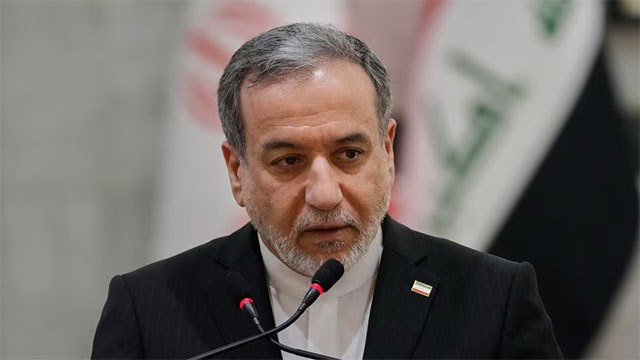
Iranian Foreign Minister Seyed Abbas Araghchi hit back on Thursday at US President Donald Trump’s claim that Washington has “total control” over the Strait of Hormuz, accusing the United States of repeated intelligence failures.
In a post on X, Araghchi cited the war with Iran as an example and warned that Washington risked a larger misjudgement over the waterway.
“The U.S. has long miscalculated due to intelligence failures. Case in point: The war on Iran. Now, an even bigger miscalculation on the Strait of Hormuz. Worse than fake news is fake intelligence. Be careful,” the post read.
What Trump said
Trump had claimed on Truth Social that the United States held “total control” of the strait and would keep it, describing the US naval deployment as a “WALL OF STEEL” and saying Iran could do nothing to counter it.
“The U.S.A. has total control over the Strait of Hormuz. I THINK WE WILL KEEP IT! Our Naval Blockade is being called, by everyone, ‘A WALL OF STEEL,’ and there is nothing Iran can do about it,” he wrote. He also claimed Iran’s military infrastructure had been severely degraded, adding: “All they have is FAKE NEWS and 300% INFLATION, and getting worse!”
Iran’s Persian Gulf Strait Authority has separately maintained that repeated statements by US officials do not alter the position on the ground, saying the strait “remains blocked and will not be reopened until Iran’s conditions are accepted.”
That has been Tehran’s stance since talks hit a fresh impasse on Tuesday, when Iran’s top security official Mohsen Rezaei set out the conditions — release of frozen Iranian assets, an end to regional conflicts and a lifting of the US naval blockade of Iranian ports.
Why it matters for Sri Lanka
The Strait of Hormuz links the Persian Gulf to the Gulf of Oman and the Arabian Sea and carries close to 20 percent of global energy trade. A prolonged closure keeps crude elevated and feeds straight into Sri Lanka’s import bill and fuel pricing formula, though oil fell more than a dollar on Thursday after OPEC and the IEA cut their 2026 demand forecasts.
Ada Derana credited ANI and agencies for the report.