The introduction of digital security stamps on alcoholic beverages has yet to result in a significant increase in government tax revenue, officials have revealed before the Committee on Public Finance (CoPF).
The disclosure adds to a run of parliamentary scrutiny of the liquor security-marking regime, which was designed to authenticate legally produced and duty-paid liquor and to close off excise leakage.
A system under sustained committee scrutiny
The CoPF has been examining the sticker programme for several months. In July, committee chairman Harsha de Silva said there was a large-scale scam behind the production of the stickers, telling the committee that a racket producing counterfeit markings was allowing untaxed liquor to reach the market. He estimated the state loses about Rs. 3,600 on every bottle of illicit “old arrack,” on which legitimate taxes should total roughly Rs. 1,600.
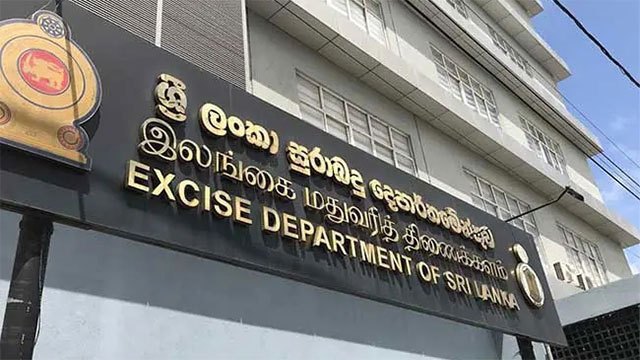
The finding reported to the committee also sits alongside the Excise Department’s own account of its performance. When the department announced that it had collected Rs. 141.5 billion in the first half of 2026 — 118.6% of its half-year target — Commissioner General M.B.N.A. Pemarathne listed the introduction of new security stickers among the enforcement measures that had helped raise and protect revenue, together with stricter supervision of distilleries and bonded warehouses.
The two accounts are not directly comparable: the departmental release addressed overall excise collection, while the officials before the CoPF were speaking to the specific contribution of the digital stamps.
The marking system’s commercial arrangements are also in flux. Cabinet approved a proposal in May to call international competitive bids for a new five-year contract covering both the physical security markings and the underlying data system, ahead of the existing contract’s expiry at the start of January 2027.
Ada Derana’s report of the committee proceedings did not detail the figures presented to members or name the officials who gave evidence.