Iran has decided to shift its policy from defensive to “fully offensive” as efforts to agree a permanent end to its war with the United States remain deadlocked, a senior Iranian official told Reuters on Monday.
Monday was the day by which Washington and Tehran had been expected to reach a final deal under a memorandum of understanding agreed in June. Progress towards peace talks and a resumption of oil tanker traffic through the Strait of Hormuz has ground to a halt, Ada Derana reported, with no sign either side is moving to end the conflict the US and Israel launched on February 28.
“Iranian entities must be prepared to escalate tensions in the Strait of Hormuz and wider region,” the official said, adding that Tehran would carry out a “timely and precise” military attack to break the US naval blockade if diplomacy failed.
How the MoU unravelled
Signed on June 17, the memorandum set a 60-day timeframe, extendable by mutual consent, for an agreement covering broader issues including the future of Iran’s nuclear programme. It declared an immediate and permanent halt to military operations on all fronts.
The pact collapsed over control of the waterway. Tehran said point 5 gave it the right to manage the strait; Washington rejected that reading. Fighting resumed after Iran began firing on vessels it said were using an unapproved route. President Donald Trump declared the pact “over” on July 7.
The official said all the agreement’s provisions must be implemented by the US within “a few weeks” as a precondition for further negotiations, and that mediators would pass Tehran’s deadline to Washington and regional states.
Public signals from the IRGC
Speaking on state television, Revolutionary Guards political bureau head Brigadier General Yadollah Javani said his forces were ready to take whatever action was needed and warned opponents to expect “strategic surprises,” Al Jazeera reported. Javani said the strait would reopen only when Washington honoured its commitments.
Both sides have sharpened their rhetoric. Trump told a rally on Friday that Americans should expect continued high fuel prices and said he would soon declare the strait US territory — a claim the White House later characterised as a joke. On Monday he posted that the “number one Goal” remained preventing Iran from obtaining a nuclear weapon.
Trump turns on Oman
In a Fox News interview the same day, Trump threatened to bomb Oman if it “gets in the way” of a US deal with Iran over the strait. “If Oman gets in the way, we’ll bomb the s--- out of them,” he told journalist Trey Yingst, Ada Derana reported.
The threat was directed at Muscat’s separate track with Tehran. Iranian and Omani officials have been negotiating for weeks over future maritime navigation arrangements through the waterway, and Iran’s foreign ministry said on Monday the two sides were working towards a joint declaration. Washington is pursuing its own talks in parallel. Oman lies on the southern flank of the strait, Iran on the northern.
Trump also said Iran should “put up the white flag of surrender,” according to Yingst’s account of the interview posted on X, while insisting he was in no hurry to reach an agreement — this despite the war’s unpopularity in the United States ahead of November’s midterm elections.
He confirmed his administration maintains a direct back-channel to officials of Iran’s Revolutionary Guard. “They’re good poker players, but they’re dying,” he was quoted as saying.
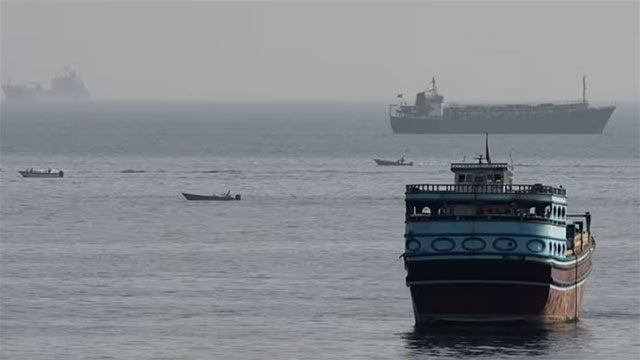
Tanker traffic through the strait has been near standstill for weeks, a disruption that continues to weigh on Sri Lanka’s fuel import costs.