Former President Ranil Wickremesinghe has warned that Sri Lanka could face another serious economic crisis after 2028 unless it moves urgently to rebuild foreign reserves and strengthen foreign exchange earnings.
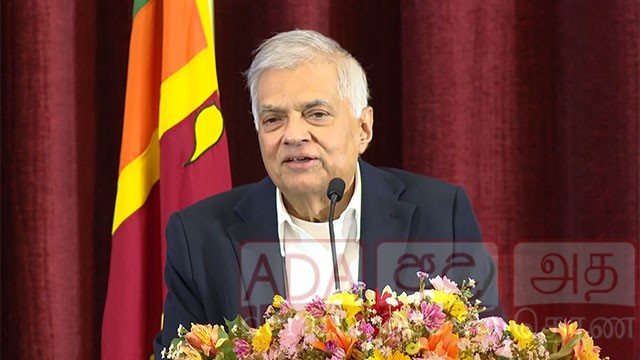
Wickremesinghe was delivering the keynote address at the launch of former Minister Ranjith Siyambalapitiya’s book, Yuddha Dekakata Ura Dee, at the Lotus Hall of the BMICH in Colombo, Ada Derana reported.
The $7 billion gap
Central Bank projections put Sri Lanka’s foreign reserves at approximately US$8 billion by the end of 2026, the former President said. He argued the country needs around US$15 billion by 2028 to meet its debt repayment obligations — a shortfall of roughly US$7 billion to be closed over two years.
“The main question is how we will find the US$7 billion and how we will repay the debt,” he said.
Daily Mirror’s account of the same speech adds that Wickremesinghe put a bond issue in the mix. “Sri Lanka will have to increase its reserves up to USD 15 billion and will have to issue bonds worth 3 billion in order to raise funds in order to start repaying its debts by 2028,” he said, according to that report. “The Central Bank has said Sri Lanka’s foreign reserves will only increase up to USD 8 billion. How are we to find the remaining amount to begin repaying the debts?”
The two reports frame the timing slightly differently: Ada Derana reported the risk as arising after 2028, Daily Mirror as a 2027/28 challenge.
Sri Lanka secured an extension on its debt repayments until 2028 under its restructuring, giving it time to rebuild. Repayments resume after that period, Wickremesinghe said, making it essential to accumulate adequate reserves and sufficient dollar liquidity in the domestic market beforehand.
He also raised questions about the country’s direction after the current International Monetary Fund programme is expected to conclude in March 2027, asking whether the government intends to continue working with the Fund and what economic programme it would implement thereafter.
Criticism of the current approach
Wickremesinghe said several laws introduced during his administration were designed to strengthen the economic framework, including the Central Bank Act, the Public Finance Management Act, the Public Debt Management Act and the Economic Transformation Act.
He claimed the current administration had decided not to proceed with the Economic Transformation programme without introducing an alternative strategy for generating the foreign exchange needed to meet future obligations.
Recalling the 2022 collapse, he said the economy had buckled amid falling government revenue, foreign exchange shortages and difficulties meeting debt obligations. India provided approximately US$4 billion in assistance during that period, he said, with further support from Bangladesh, the World Bank, the Asian Development Bank, Japan and other partners. He credited officials and ministers involved in the recovery with helping stabilise the rupee.
The priority now should be generating foreign exchange, increasing exports and attracting investment, he said, urging policymakers to focus on debt obligations rather than allowing political and constitutional disputes to overshadow them.
Referring to the theme of Siyambalapitiya’s book, which deals with two earlier crises, Wickremesinghe described the coming challenge as a “third war” — an economic battle that would determine the country’s future. Siyambalapitiya also addressed the event.