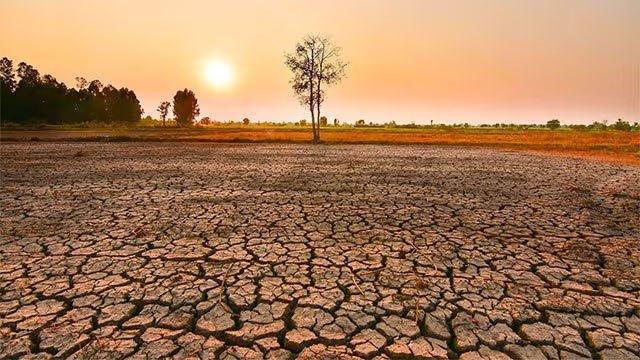
The El Niño event affecting Sri Lanka has strengthened from a strong event to one approaching the “very strong” category, Environment Minister Dr. Dammika Patabendi said on Thursday, and emergency drinking water is being trucked to communities in six districts.
Patabendi told a media briefing that the special committee appointed to mitigate the effects of El Niño met on August 17 to review conditions and forecasts. Experts believe the current situation could be among the most severe in roughly 75 years, he said, according to NewsFirst.
Impacts concentrated, not district-wide
Authorities have identified several districts facing drinking water and irrigation problems — Ampara, Monaragala, Batticaloa, Ratnapura, Badulla and Matale. The minister stressed that conditions have not affected entire districts but are concentrated in specific divisional secretariat and grama niladhari divisions.
Drinking water is being supplied to affected communities by bowser alongside other emergency measures, he said.
Patabendi separately told the same briefing that the Ministry of Defence issued a circular on August 6 to ensure uninterrupted water supplies during droughts arising from future El Niño events, Ada Derana reported. The circular amends existing rules to allow faster intervention in drought-hit areas.
Dry through September, then a wet turn
Department of Meteorology Director General Ajith Wijemanna said suppressed rainfall is expected through the rest of August and much of September, particularly in the Northern, Eastern and North Central provinces and the Monaragala district.
Conditions should begin changing towards the latter part of September. Historical analysis of past El Niño events points to above-normal rainfall in October and November, continuing into December, when the northeast monsoon could bring significantly wetter weather.
Wijemanna put the global probability of the El Niño persisting into the first quarter of next year at 97%, up from earlier estimates. He warned that rainfall in February, March and April 2027 could be significantly lower, with rising temperatures producing heat that may be difficult to tolerate.
Ada Derana reported separately on Thursday that the dry weather has now affected more than 81,000 people across seven districts, according to the National Disaster Relief Services Centre — up from the 70,828 recorded on August 14.
The Met Department warned last week that this could be the strongest El Niño in 75 years, prompting the government to bring the Maha cultivation season forward by about two weeks.
Sources
- Sri Lanka on Alert as ‘Very Strong’ El Niño Threatens Water, Farming and Daily Life — NewsFirst, August 20
- Circular issued to ensure water supply during future El Niño-related droughts: Minister — Ada Derana, August 20
- 97% chance El Nino will continue until Q1 next year - Met Dept. — Ada Derana, August 20