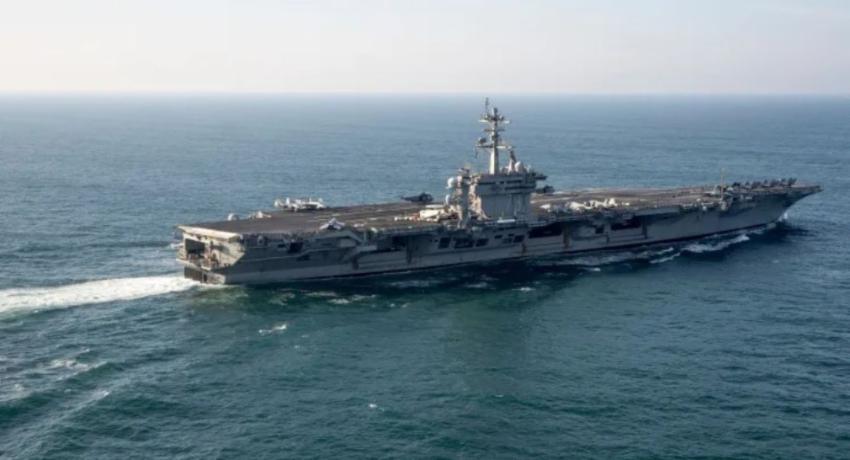
The USS George Washington carrier strike group has arrived in the Middle East, US Central Command (CENTCOM) said on Thursday, taking over from a vessel whose prolonged deployment has drawn political scrutiny in Washington.
CENTCOM said the carrier reached the Arabian Sea on Wednesday as “part of a scheduled deployment”. It replaces the USS Abraham Lincoln, which has been on station through most of the war between Iran and the US and Israel.
A record deployment
The Lincoln left San Diego last November and was first deployed off the coast of Venezuela before being rerouted after the US and Israel began strikes on Iran on February 28. It went on to set a US naval record for the longest deployment without a port stop, with roughly 5,000 sailors and Marines on board.
Attention turned to conditions on the ship last week amid reports of thin food and hygiene supplies and maintenance problems caused by the time at sea. Military newspapers reported food and water shortages, disrupted mail services and plumbing failures, NewsFirst reported. Families of crew members described the toll on mental health and morale, and Al Jazeera reported several accounts to US media of individuals seeking to jump overboard.
Several Democratic legislators have said the situation reflects poor planning by the Trump administration for a conflict that has run for nearly six months without a clear end. Al Jazeera reported that a CENTCOM spokesperson confirmed the Lincoln was en route to the United States; no date has been announced for its return.
The rotation leaves the United States without an aircraft carrier in the Western Pacific, despite Washington’s stated strategic focus on that region.
Hormuz context
A CENTCOM spokesperson told Al Jazeera on Thursday that the military had facilitated the passage of 1,300 ships through the Strait of Hormuz. Iran has continued to assert control over the waterway, while the US says it can sustain its blockade of Iranian ports indefinitely.
The strait remains the central economic risk of the conflict for Sri Lanka, which imports effectively all of its fuel. The Ceylon Petroleum Corporation has flagged concern over global diesel prices, oil reached three-week highs on Thursday, and the disruption has begun redrawing cargo routes through the island.