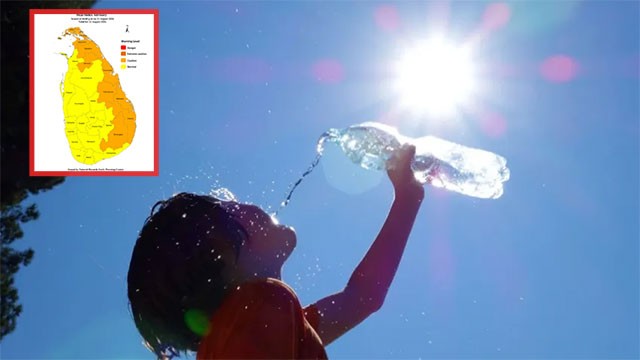
The Department of Meteorology has issued a warm weather advisory for Saturday covering the Eastern Province and the Jaffna, Kilinochchi, Vavuniya, Mullaitivu, Monaragala and Polonnaruwa districts.
The heat index — the temperature as it is felt on the human body — is likely to rise to “Caution” level at some places in those areas during the daytime on Saturday, August 22, the Department said.
Residents have been asked to stay hydrated and to limit strenuous outdoor activity. The Daily Mirror, which also carried the warning, said the public had been advised to remain cautious and take precautions against the effects of excessive heat during daylight hours.
What the Caution level means
The Met Department calculates its Heat Index Forecast from relative humidity and maximum temperature, producing a figure that reflects what conditions feel like rather than the air temperature alone.
At the Caution level, the Department said, prolonged exposure to the sun and sustained outdoor activity will cause fatigue, and continuing to exert oneself in those conditions can lead to heat cramps.
The warning area has narrowed slightly
Saturday’s advisory covers a marginally smaller area than the one issued a day earlier. The advisory for Friday named the Eastern and North Central provinces in full alongside five districts. Saturday’s names only Polonnaruwa from the North Central Province, leaving Anuradhapura off the list, while adding no new districts elsewhere.
The Department did not say what accounted for the change.
A month of repeated advisories
The warning is the latest in an almost daily run of heat advisories through August. The heat index reached Caution level across seven districts in mid-August, and a similar advisory covered the Eastern and North-Central provinces at the start of the month.
The Ministry of Health warned this week that prolonged exposure to direct sunlight can cause serious heat-related illness and, in severe cases, death, advising the public to stay out of the sun between 11 a.m. and 3 p.m.
The advisories sit against a wider dry-weather picture. Forecasters said this week that the current El Niño is the strongest in living memory and is likely to persist into the first quarter of next year, with dry conditions already affecting tens of thousands of people across several districts.