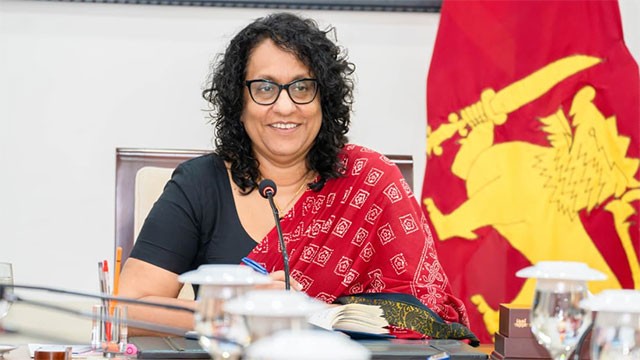
Prime Minister Dr. Harini Amarasuriya has said Sri Lanka’s school nutrition programme must do more than hand out free meals, telling World Food Programme officials that the country needs to confront the underlying causes of non-communicable diseases.
Amarasuriya, who also holds the education, higher education and vocational education portfolio, made the remarks at a meeting with WFP representatives at Temple Trees on Monday. The discussion covered strengthening school nutrition programmes and wider nutrition and health challenges.
She said the rising prevalence of non-communicable diseases was a major concern and that the factors driving that increase needed examination. The school nutrition programme, she argued, should not be confined to providing free meals to targeted communities, but should promote healthier eating habits, better dietary practices and greater nutritional awareness across the school system.
The Prime Minister said efforts to promote healthy diets should be integrated with stronger primary and preventive healthcare, and that policies on nutrition and NCDs should rest on research, reliable evidence and a clear understanding of the root causes of the country’s nutritional and health problems.
The government’s school nutrition programme currently runs in targeted schools and among identified families, with separate nutrition interventions introduced at the early childhood level.
WFP signals expanded role
WFP representatives said the organisation was ready to continue its partnership with the government and support work to strengthen school nutrition. The delegation welcomed changes already underway and said it was interested in working more closely with the government and other stakeholders to expand nutrition interventions within the education system.
The agency also pressed for closer cooperation between universities, the Ministry of Education, United Nations agencies and other institutions to make nutrition programmes more effective.
Attending were WFP Representative and Country Director Philip Ward, Deputy Country Director and Head of Programmes Robert Oliver, and Professor Jayashree Arcot of the University of New South Wales in Sydney, along with WFP staff and Education Ministry officials.
The scale of the problem
Non-communicable diseases account for 83 percent of all deaths in Sri Lanka, according to Health Ministry figures. One in three Sri Lankans has a heart-related ailment, and 15 percent of the population has been diagnosed with diabetes — with roughly half of those diagnosed receiving no treatment.
Ada Derana did not report any new funding commitment or programme launch arising from the meeting. At the time of writing, on Monday afternoon, no other verified Sri Lankan newsroom had published its own report of it.