The Public Utilities Commission of Sri Lanka has approved a new set of feed-in tariffs for renewable electricity that take effect on Tuesday, sharply increasing what the grid will pay for solar power paired with battery storage.
The rates run from August 25 until February 24, 2027, and cover renewable power plants, rooftop solar prosumers and projects fitted with Battery Energy Storage Systems (BESS).
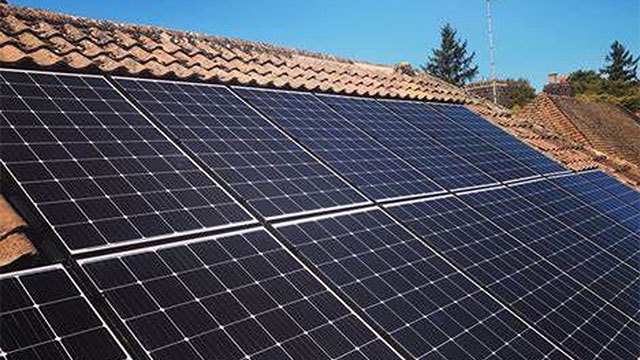
The clearest signal in the new schedule is the premium for storage. Rooftop systems above 250kW and up to 1,000kW will be paid Rs. 45.53 per unit during the prioritised feed-in period, for the first 15 years; systems above 1,000kW will receive Rs. 42.49. By comparison, rooftop solar without storage earns between Rs. 23.11 a unit for systems up to 10kW and Rs. 15.81 for those above 250kW — roughly a third of the solar-plus-storage rate.
Separate storage-linked tariffs have also been set for ground-mounted and floating solar projects.
Rates by technology
For plants without storage, the non-escalable component was set at Rs. 30.37 a unit for mini-hydro, Rs. 20.80 for wind, Rs. 18 for ground-mounted solar PV and Rs. 23.58 for floating solar PV. Biomass rates are Rs. 16.43 for dendro and Rs. 14.29 for agricultural and industrial waste, with waste heat recovery also at Rs. 14.29. Municipal solid waste draws the highest rate in the schedule at Rs. 41.72.
The non-escalable component is adjusted once, 12 months after the power purchase agreement is signed. The calculation used an exchange rate of Rs. 341.09 to the US dollar and a Colombo Consumer Price Index value of 207.70.
The Daily Mirror reported that the methodology was approved under Section 29 of the Sri Lanka Electricity Act No. 36 of 2024, following a public consultation in which stakeholder submissions and project cost data were considered.
A 450MW target and a cost ceiling
Behind the rates is a capacity problem. The National System Operator has been directed to secure at least 450MW of solar PV with battery storage by March 2027 to close a projected shortfall in the first quarter of that year and avoid power cuts caused by insufficient generation.
The Commission also capped what consumers can be charged for it. The average monthly cost of the 160MW of BESS already offered to the system must not exceed Rs. 20 per kWh. Anything above that threshold will not be recognised, recovered, or passed on to consumers through the end-user tariff.
Regulator flags El Niño risk
At the same media briefing, PUCSL Chairman K. P. L. Chandralal warned that prevailing El Niño conditions could raise electricity demand while cutting generation if the water sources feeding hydroelectric plants dry up, according to a separate Ada Derana report. He said the combination of higher demand and reduced output could put the national supply under pressure.
The warning lands amid a dry spell that has left more than 81,000 people short of drinking water across seven districts and put the country within reach of a 43-year-old heat record. Energy Minister Anura Karunatilaka separately said the government is moving to add 410MW of battery storage along with new solar capacity.