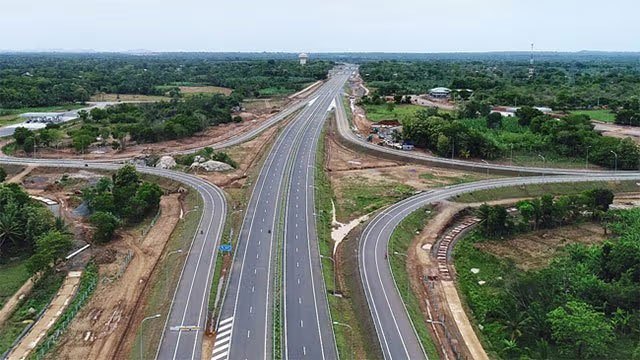
The Cabinet has approved a Rs. 104.9 billion programme to build connecting roads between the Central Expressway and the existing road network in the Western, Central and North Western provinces.
The proposal, submitted by the Minister of Transport, Highways and Urban Development, covers Sections I, III and IV of the expressway and will be implemented over the 2026–2030 period. The stated aim is to improve connectivity, accessibility and traffic flow between the expressway and the roads that feed it.
What gets built
The three sections account for 283.02 kilometres of new link roads between them:
- Section I — 117.68 km
- Section III — 83.98 km
- Section IV — 81.36 km, across nine link roads
Both newsrooms give identical distances for all three sections, and both put the provisional total cost at Rs. 104.9 billion.
The two accounts differ on how many individual roads make up each section. Ada Derana reports 12 link roads for Section I and 14 for Section III; Daily Mirror gives no road count for Section I and puts Section III at 12. The discrepancy looks like a figure attached to different sections in the two write-ups rather than a dispute over the scope of the work, but neither outlet published a full road-by-road schedule, and the Cabinet decision as reported does not resolve it.
Filling in the gaps around an unfinished expressway
The Central Expressway is being built in stages, and the link-road programme addresses a recurring criticism of the project: that expressway sections deliver less than their designed benefit while the roads connecting them to towns and existing highways lag behind.
Work on the Rambukkana–Galagedara stretch was approved in May at a cost of Rs. 112 billion, funded from the Treasury without new borrowing, and broke ground later that month.
Neither report specifies the funding source for the link roads, whether contractors have been selected, or how the Rs. 104.9 billion is phased across the five years to 2030.