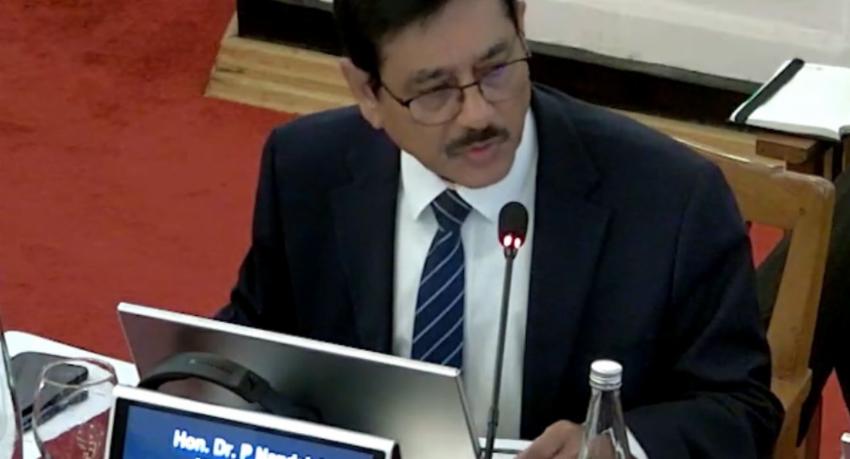
Sri Lanka’s economy has recovered to almost the level it held before the 2022 crisis, Central Bank Governor Dr. Nandalal Weerasinghe said at a briefing organised by the Ministry of Foreign Affairs for senior government officials and members of the diplomatic community.
“The economy has now recovered to almost the level seen before the crisis. This represents a strong recovery over a relatively short period,” Weerasinghe said, pointing to stronger public finances, improved fiscal balances and progress towards debt sustainability as the pillars of the turnaround.
The Governor said the country had recorded growth for a third consecutive year since the crisis, and that growth is expected to hold at around 4 to 5% this year. He cautioned that the Middle East crisis could weigh on the economy in the second half.
Revenue nearly doubled
Weerasinghe said the government’s revenue-to-GDP ratio has risen by almost 100% within three years, reversing a period in which state revenue had fallen to exceptionally low levels and widened the fiscal deficit. He described the increase as a “remarkable achievement” and attributed it to a combination of revenue mobilisation, expenditure control and fiscal discipline.
Weak revenue, large deficits, depleted reserves and an unsustainable debt burden converged in 2022 to leave Sri Lanka unable to meet its external obligations, producing the country’s first sovereign default.
On debt, the Governor said Sri Lanka has restructured its debt-service obligations for the next 10 years with the support of bilateral, multilateral and commercial partners, and will be able to meet both domestic and external obligations over that period.
Rating talks under way
The authorities are in discussions with all three major international credit-rating agencies, Weerasinghe said. Sri Lanka has already moved out of the restricted-default category into speculative-grade territory following progress on restructuring.
“We are hopeful that Sri Lanka will soon receive a further upgrade, reflecting the progress that has been achieved,” he said. The country nonetheless remains below investment grade.
He added that the current account is expected to shift back into surplus in the second half of the year, and that Central Bank policy should bring inflation back to the 5% target by the first half of 2027. Sri Lanka is now viewed internationally as an example of a relatively fast recovery from a severe balance-of-payments and debt crisis, he said.
NewsFirst headlined the growth figure as “near 5%” while its own report of the Governor’s remarks gave the range as 4 to 5%. The Middle East caveat lands as Iranian tankers idle off Galle amid the US blockade. Sri Lanka last posted 5.1% growth in the first quarter of 2026.

