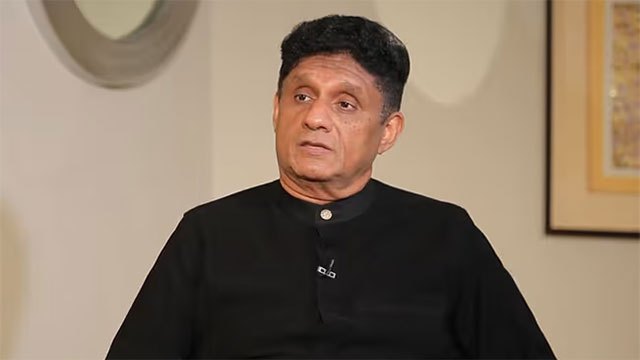
Opposition Leader Sajith Premadasa said Sri Lanka must prepare in advance for severe weather arising from El Niño and La Niña conditions, warning that a period of heavy rainfall could follow the current drought.
He said these conditions can produce extreme swings — from severe drought to heavy rainfall within a short period — and that two weather extremes can occur in succession, Ada Derana reported on Wednesday.
Premadasa was speaking at a ceremony presenting the act of appointment to Most Venerable Sapugasyaye Dharmapala Thera, who was appointed Sub-Chief Sanghanayaka of Talpe Pattuwa, covering the Matara and Hambantota divisions.
”Responding after disasters is not sufficient”
Premadasa argued that the country must be adequately prepared whether or not those conditions materialise, and that the existing disaster management structure needs to be transformed. Responding after disasters occur is not enough, he said, according to Hiru News.
He said Sri Lanka should learn from Odisha State in India, moving beyond a mechanism that merely reacts once a disaster has happened. Odisha is widely cited in disaster-management literature for cutting cyclone death tolls sharply through early warning systems and pre-emptive mass evacuation.
What is needed, he said, is a new disaster management framework together with new programmes and institutions, with the objective of creating a nation able to withstand frequently recurring disasters.
Premadasa said that even after tens of thousands of lives were lost in the 2004 tsunami, sufficient attention has not been given to building a modern disaster management methodology in Sri Lanka. He added that the process should be built jointly by all parties, including the government, non-governmental organisations and civil society.
The backdrop
The remarks come with the drought well documented. Reservoir storage has fallen to 36% of capacity, dry weather has damaged thousands of acres of crops, and the government has been running food supply assessments against the same pattern. The Met Department has separately warned that El Niño may trigger heavy rainfall and flooding later in the year — the reversal Premadasa is pointing to.
It also follows Sri Lanka’s own argument at UNCCD COP17 this week that drought preparedness must begin before a crisis, placing government and opposition on similar ground on anticipatory planning if not on the institutional remedy.
At the same event, Premadasa said protecting the Sambuddha Sasana without distinction of race, religion, caste, class or party is everyone’s responsibility, and that the protection and identity of other religions and communities should also be secured. He said an economically weakened country can face pressure from foreign organisations, international financial institutions and multinational companies, and that such pressure should be met in unity.
Neither report specified what institutions the proposed framework would create, or how it would relate to the existing Disaster Management Centre.