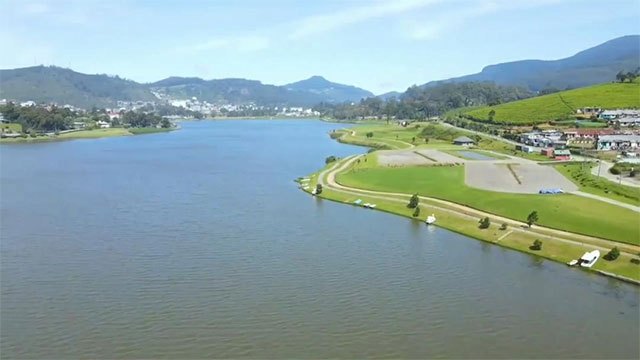
Authorities have launched an urgent joint action plan for Gregory Lake in Nuwara Eliya, days after Central Environmental Authority testing found the water polluted to a degree that could endanger human life if drunk.
Deputy Minister of Environment Anton Jayakody led a special inspection and joint discussion at the Nuwara Eliya District Secretariat on Friday morning, the Daily Mirror reported.
Who is now responsible
The meeting decided to establish a management committee drawing on the Sri Lanka Navy, the Central Environmental Authority, the Nuwara Eliya Municipal Council and the District Secretariat, tasked with framing and carrying out immediate measures. The Navy already operates on the lake, where it rescued two children after a jet ski overturned this month.
Also present were Deputy Minister of Education Dr. Madhura Seneviratne, District Coordinating Committee Chairman and MP Manjula Suraweera Arachchi, District Secretary Nandana Jayakody, Environment Ministry Secretary K. R. Uduwawala, the CEA’s district director and officials from the Irrigation Department, the National Water Supply and Drainage Board and the Urban Development Authority.
Restarting a system that already exists
The plan’s first practical step is not new construction but a restart. Officials agreed to reactivate an existing 13-pond natural treatment system, built to filter agricultural runoff and urban wastewater before it reaches the lake. Further measures include improving natural aeration and adding natural filtration to cut foul odours and bring down nitrogen and phosphorus levels.
Those are precisely the two readings the CEA flagged. Its data put phosphate at 1.04 milligrams against a normal 0.20, and nitrogen at 3.70 against about 0.50, with biochemical oxygen demand at 9.72 — findings the MP disclosed this week and attributed to pesticides, fertiliser and other chemicals washing down from up-country farms once the smaller feeder reservoirs silted up.
Longer-term work to stop wastewater from the Nuwara Eliya municipal sewerage network entering the lake is to be expedited. The stated aim is to restore the lake’s environmental quality while protecting its value as one of the hill country’s main tourist attractions.
Neither the report nor the meeting set a deadline, named a budget, or said when the 13-pond system stopped working or why.