The threat that a debris-dammed lake near the China-Nepal border would burst and send a second flood downstream has receded, Chinese authorities said on Saturday, as satellite imagery showed the lake steadily draining.
Water at the lake, which straddles the border at the confluence of two rivers, has been slowly flowing through since Thursday, state broadcaster CCTV reported citing the Ministry of Water Resources. Its surface area on the Purepu Tsangpo river measured 99,000 square metres early on Saturday — about the size of 14 football pitches — having shrunk by 21,000 square metres in two days, Hiru News reported.
That is the resolution of a warning that halted rescue work on Friday, when China’s water ministry said the lake had begun to overflow and flagged a “high risk” of a breach. An overflow that day paused operations until a further assessment judged the risks manageable.
A second body of water is still unmeasured
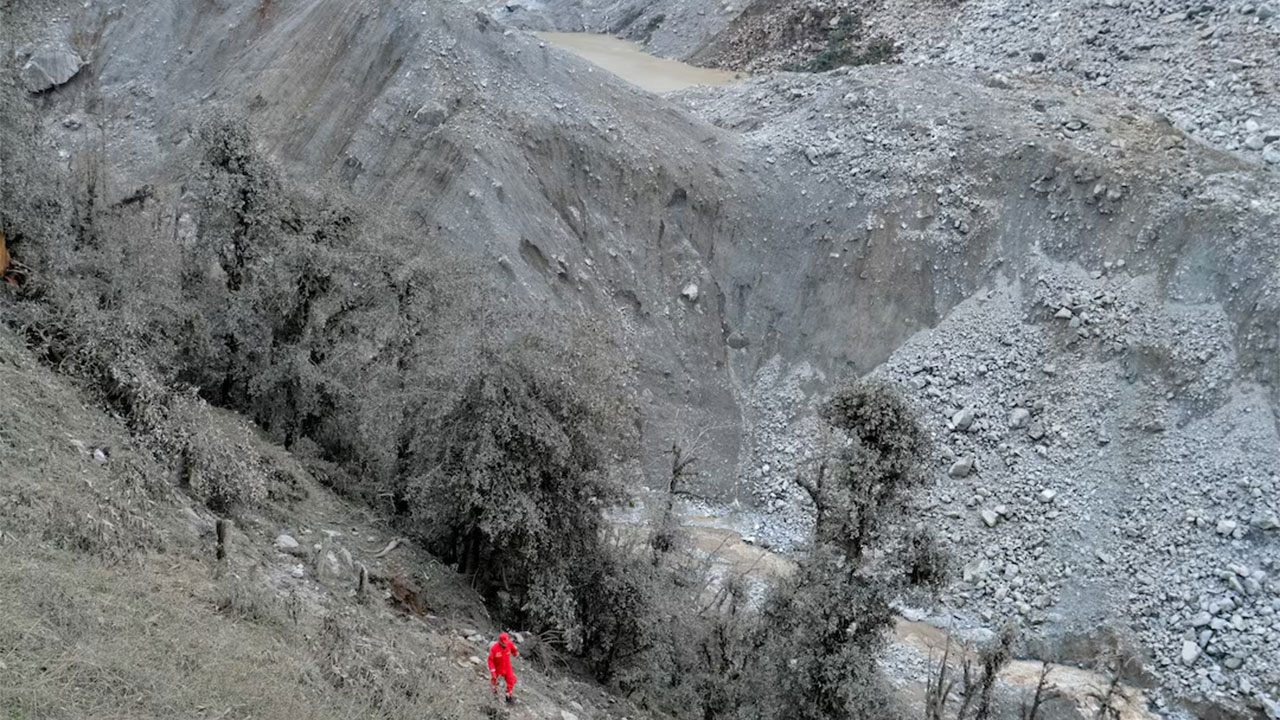
Authorities have flagged a larger pool at the foot of the glacier collapse that has not been surveyed. “We estimate its area to be over 120,000 square metres, but its depth is currently unknown,” said Chen Hongqi, a senior engineer at the Ministry of Natural Resources’ Geological Disaster Technical Guidance Centre.
An official at Nepal’s Disaster Management Authority said flood risks will remain until both lakes have fully drained. China Anneng, the state engineering and rescue enterprise monitoring the site since Thursday, sent a 15-member team on Friday with reconnaissance drones, portable satellite stations and mobile surveillance cameras to gather more data.
Ground zero
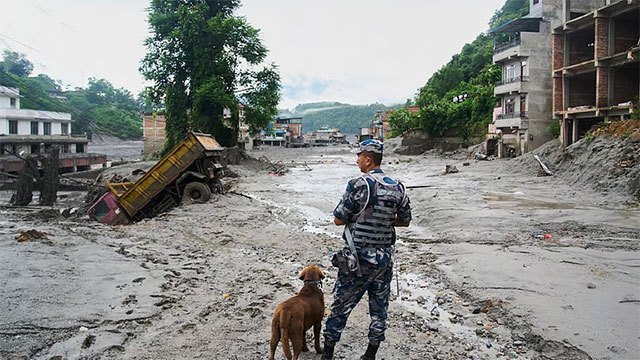
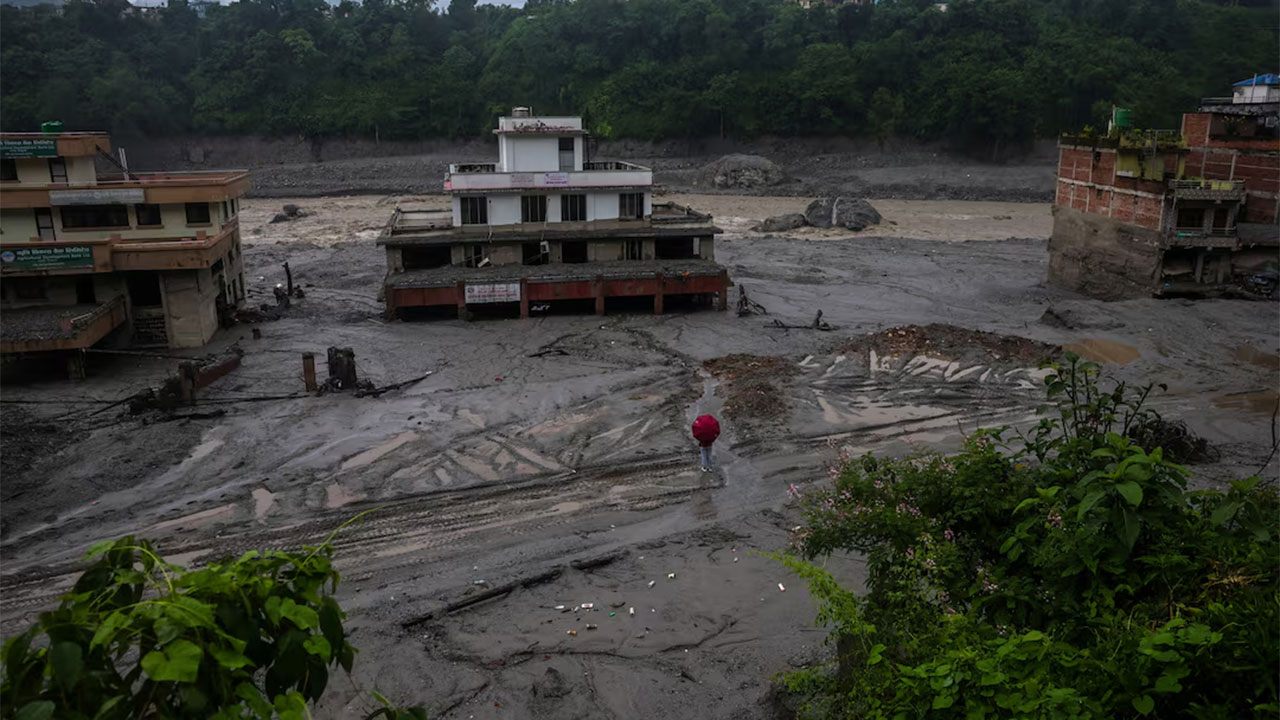
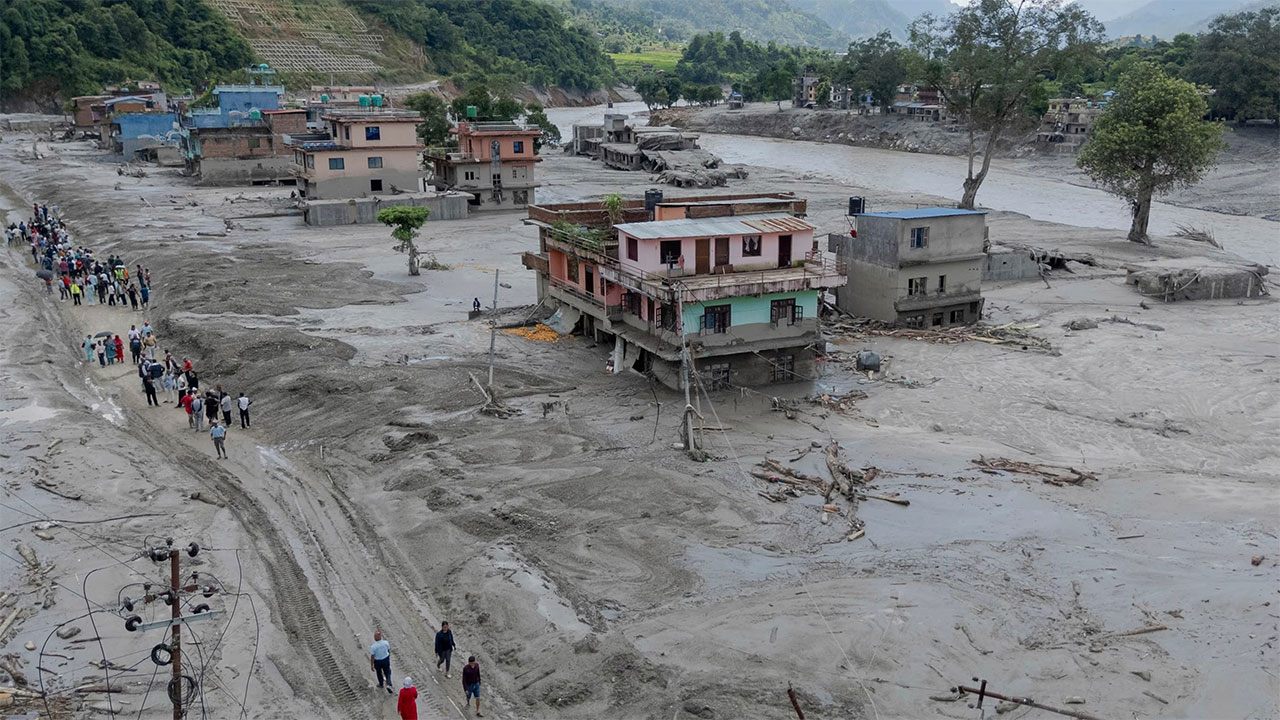
More than 50 rescue workers combed through grey rubble and mud in rainy weather on Saturday morning, calling out to any survivors, CCTV said. The first team of rescuers and a search dog reached the Gyirong border crossing complex — the main land route between Tibet and Nepal — on Friday afternoon and described it as having nothing left but ruins.
Roads and communications remain cut, which the state news agency Xinhua said continues to hamper the Chinese relief effort. Nearly 500 villagers and construction workers have been evacuated, along with all 555 tourists in the area.
China’s death toll rose to seven early on Saturday with 554 still missing, figures already reflected in the regional count of 626 dead and more than 2,400 unaccounted for. Both Ada Derana and Hiru News carried the Reuters report; Ada Derana’s version omits the satellite measurements of the first lake, which is what distinguishes it from the second.