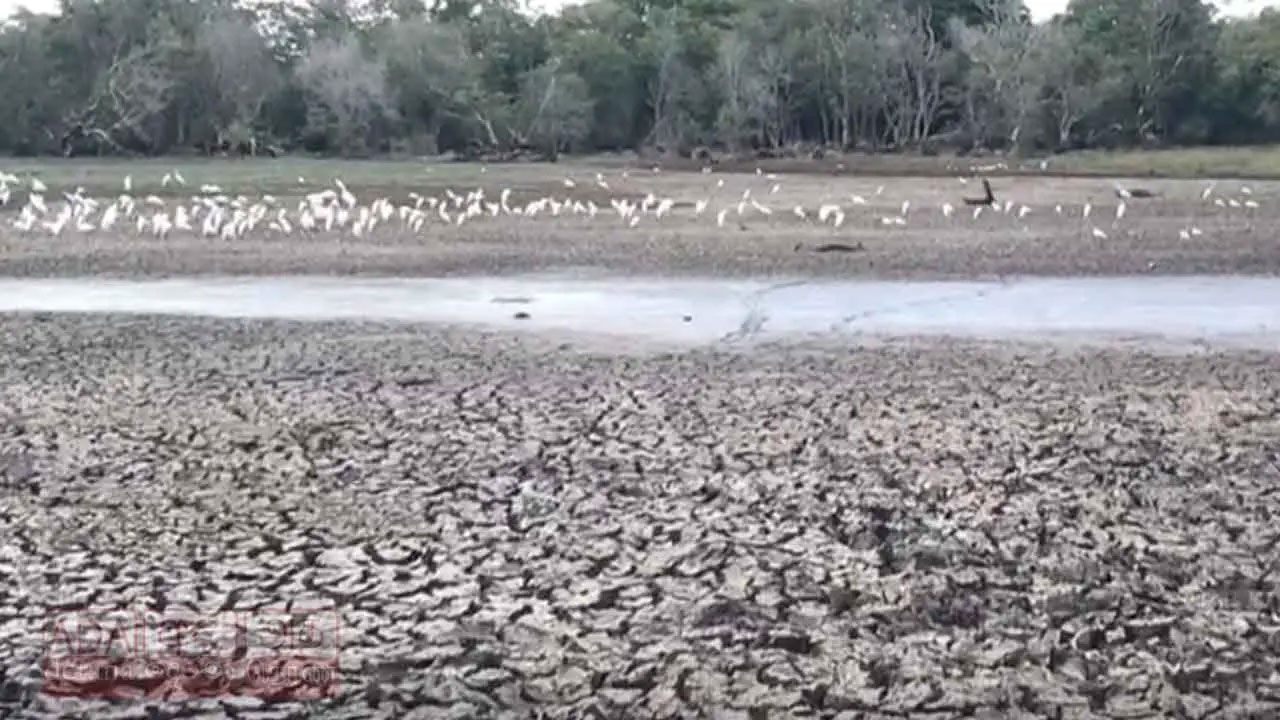
Water levels in 612 irrigation tanks in the Anuradhapura District have fallen below 5% of capacity as severe drought grips the Rajarata region, District Secretary Ranjith Wimalasooriya said on Monday, according to Ada Derana.
A further 788 of the district’s 2,410 minor irrigation tanks have almost completely dried up in the prevailing dry weather, Wimalasooriya told reporters.
The reserves are concentrated in seven reservoirs
More than 75% of the water still held in the district is concentrated in just seven major reservoirs, the district secretary said. Ada Derana did not name them.
That concentration is the most consequential figure in the account. Anuradhapura’s minor tanks are the cascade system that feeds village-level cultivation and supplies water for domestic use and wildlife across a largely rural district; with 1,400 of the district’s 2,410 tanks either below 5% or nearly dry, the water that remains is held in a small number of large storages rather than distributed across the district where it is used.
A worse year than usual
Wimalasooriya said the Rajarata region normally experiences drought conditions from July to October, but that this year’s situation is more severe than in previous years.
The rapidly declining levels have made it harder to secure drinking water and are affecting both agricultural activity and the water requirements of wildlife, he said, describing a significant impact on the people, the environment and wildlife of the region.
Context
The account is the most specific district-level measurement published so far in a dry season that has been building for weeks. Reservoir levels dropped across Kantale and several other districts in late August, the National Water Supply and Drainage Board has been turning to groundwater and tube wells to maintain supply, and extreme heat had already dried tanks and damaged crops earlier in the month.
Conditions elsewhere on Monday were consistent with a widening dry spell rather than a local problem. Ada Derana reported a warm weather advisory for several areas and a temperature of 38.8°C at Vavuniya, the highest recorded in the country that day. Hiru News reported that Batticaloa faces daily water cuts because of the dry weather, and NewsFirst published a report from Kolakanawadiya in Welikanda, Polonnaruwa, where residents said taps have stopped flowing and families travel one to three kilometres by bicycle and on foot to collect water. Those are separate districts and separate reports, and neither carries the Anuradhapura figures.
What has not been reported
Ada Derana’s report is the only account by a verified newsroom of the district secretary’s figures; Hiru News, the Daily Mirror, NewsFirst, EconomyNext and Colombo Gazette had not carried them at the time of writing.
The report does not say which seven reservoirs hold the remaining water, how many people or hectares of cultivation are affected, whether the Mahaweli system can transfer water into the district, or what relief measures — water bowsers, crop compensation or a curtailed cultivation season — are planned. Nor does it say how the current levels compare numerically with the same point in previous years, beyond the district secretary’s assessment that this year is worse.