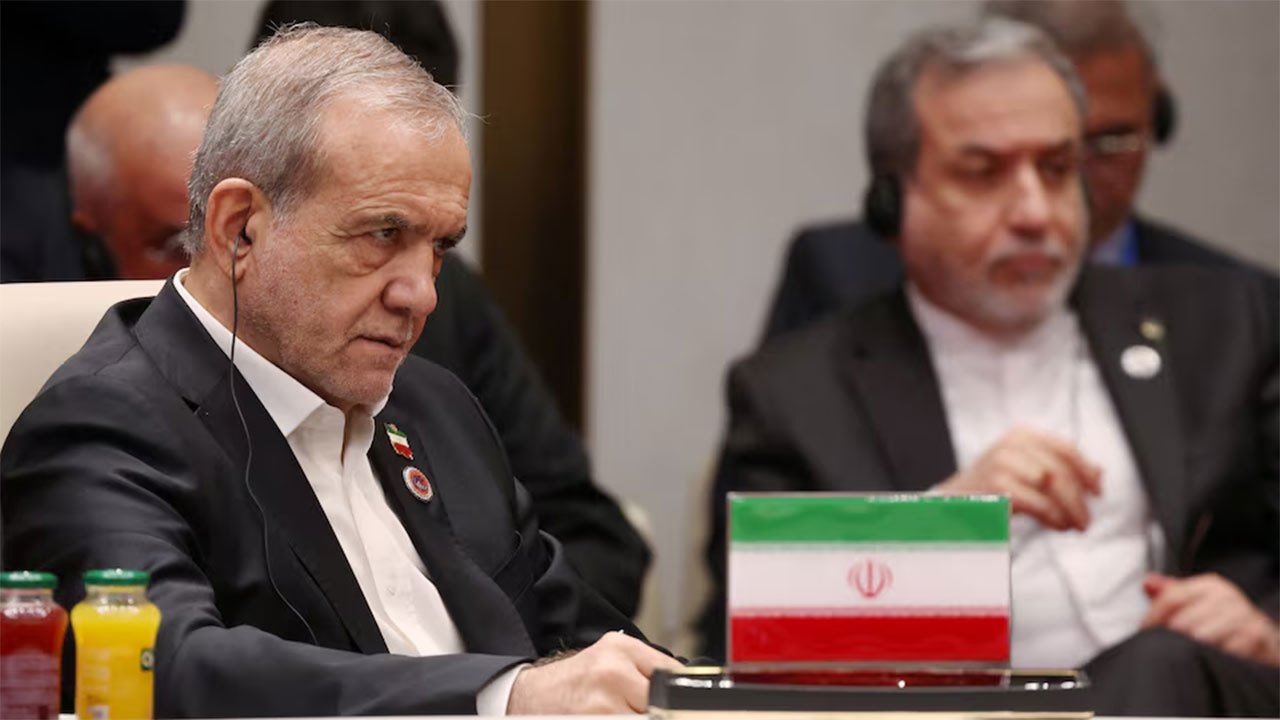
Iran will reciprocate immediately if the United States returns to its commitments under the interim deal signed in June, President Masoud Pezeshkian said on Tuesday.
“I am stating clearly that if the U.S. returns to its commitments under the Memorandum of Understanding, the Islamic Republic of Iran will immediately reciprocate,” Pezeshkian was quoted as saying by Iranian state media, in a Reuters report carried by Ada Derana and Hiru News.
The offer follows the first direct exchange since July
Pezeshkian spoke at the Shanghai Cooperation Organisation summit in Bishkek, days after the first direct exchange of attacks between the two countries since late July.
The United States struck Larak Island, and Iran then launched attacks on two US air bases in Jordan.
The June memorandum was signed between Tehran and Washington in an effort to end a war that began with US and Israeli strikes on Iran on 28 February. It unravelled quickly amid disagreements over how it was to be implemented.
Hormuz is the leverage
Tehran has repeatedly tied free navigation through the Strait of Hormuz — the channel through which a large share of the world’s seaborne oil moves — to Washington implementing the agreement’s terms.
That linkage is why the offer matters beyond the two capitals. It is the mechanism by which the conflict reaches fuel prices in importing countries, Sri Lanka among them.
Pezeshkian had said in Bishkek on Monday that war was in no one’s interest and that Tehran remained open to a negotiated settlement.
Washington’s answer was not an acceptance
US President Donald Trump told Fox News “there will be a response” after the Iranian attacks, but told reporters in the Oval Office that the renewed strikes did not signal a return to full-scale war.
Neither report indicated that the United States had responded to the reciprocity offer itself, or that any channel for resuming talks had opened.
Context
The strikes have already moved markets. Oil jumped more than 2% after the US attack on Larak Island, and the conflict has been reported by Sri Lankan officials as a factor in tourist arrivals running about 2% behind last year.
Fuel prices are the more direct channel. Domestic fuel price reductions helped contain Sri Lanka’s monthly inflation in August, but transport remained the largest single contributor to the annual rate, and the Central Bank’s forecast of inflation returning to 5% rests on oil staying near a baseline assumption of US$80 a barrel.
Both Sri Lankan outlets carried the Reuters wire in identical form; neither added local reporting or reaction.