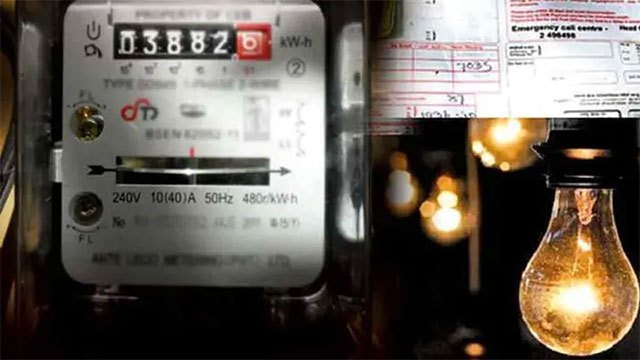
Sri Lanka Podujana Peramuna MP D.V. Chanaka has warned that electricity tariffs could rise again if the country does not get the rainfall it is counting on, speaking on Derana’s 360° programme on Monday night.
Chanaka said the government had pledged to cut electricity tariffs by a third but that tariffs had instead risen by roughly a third, Ada Derana reported. A further increase, he said, would weigh on households and on the tourism industry heading into the season.
His central technical claim concerned coal. Only about 10 percent of the losses associated with coal generation were built into the last tariff revision, Chanaka said, and those losses cannot be avoided until new coal shipments arrive. The remainder, he argued, will have to be recovered either through tax revenue or directly from electricity consumers.
He acknowledged that recent rain had allowed some hydropower generation, and that solar output had helped stabilise the grid during daylight hours.
The UN’s outlook points the other way
Within minutes of that report, Ada Derana published a United Nations assessment that identifies Sri Lanka’s dominant El Niño risk over the coming months as above-average rainfall, not drought.
The assessment places Sri Lanka among countries requiring heightened attention. It expects significant rainfall across much of the island during October and November, and above-average rainfall from December to February as the Northeast Monsoon becomes active — raising the risk of floods, inundation and disruption to farming.
The Daily Mirror reported the same assessment a day earlier, naming it as a joint Asia-Pacific product of the Food and Agriculture Organization, the World Food Programme, UN Women, the World Meteorological Organization and other UN humanitarian agencies. That report places Sri Lanka among countries of “elevated concern” and dates the onset of above-average rain to October with the Second Inter-Monsoon.
The two warnings are less contradictory than they first appear. Chanaka is describing the next few weeks, when reservoir levels and coal stocks determine generation costs. The UN is describing the fourth quarter and beyond. On the UN’s own reasoning, more rain would help refill reservoirs — but arriving during the Maha planting period it could equally bring flooding and waterlogging, delaying cultivation.
Costs on both sides
The UN assessment warns that climate risk is compounding with the Middle East crisis. Diesel and petrol prices remain around 44 percent and 41 percent higher respectively than their pre-crisis levels, per the Daily Mirror’s account, and Sri Lanka stays exposed to imported fertiliser costs and international wheat prices.
The immediate dry conditions are real and measurable. Water levels in 612 Anuradhapura tanks have fallen below 5 percent, and Ada Derana’s report quotes Anuradhapura District Secretary Ranjith Wimalasooriya saying a number of the district’s reservoirs have dried up. Deputy Minister of Agriculture Namal Karunaratne said the government is already arranging compensation for farmland affected by El Niño conditions.
The UN notes that a window for preparedness remains open, as the risks have not yet developed into widespread impacts. Our earlier coverage set out how El Niño is squeezing hydropower and agriculture at the same time.
No outlet has reported a government response to Chanaka’s tariff warning, and the Public Utilities Commission has not signalled a further revision.