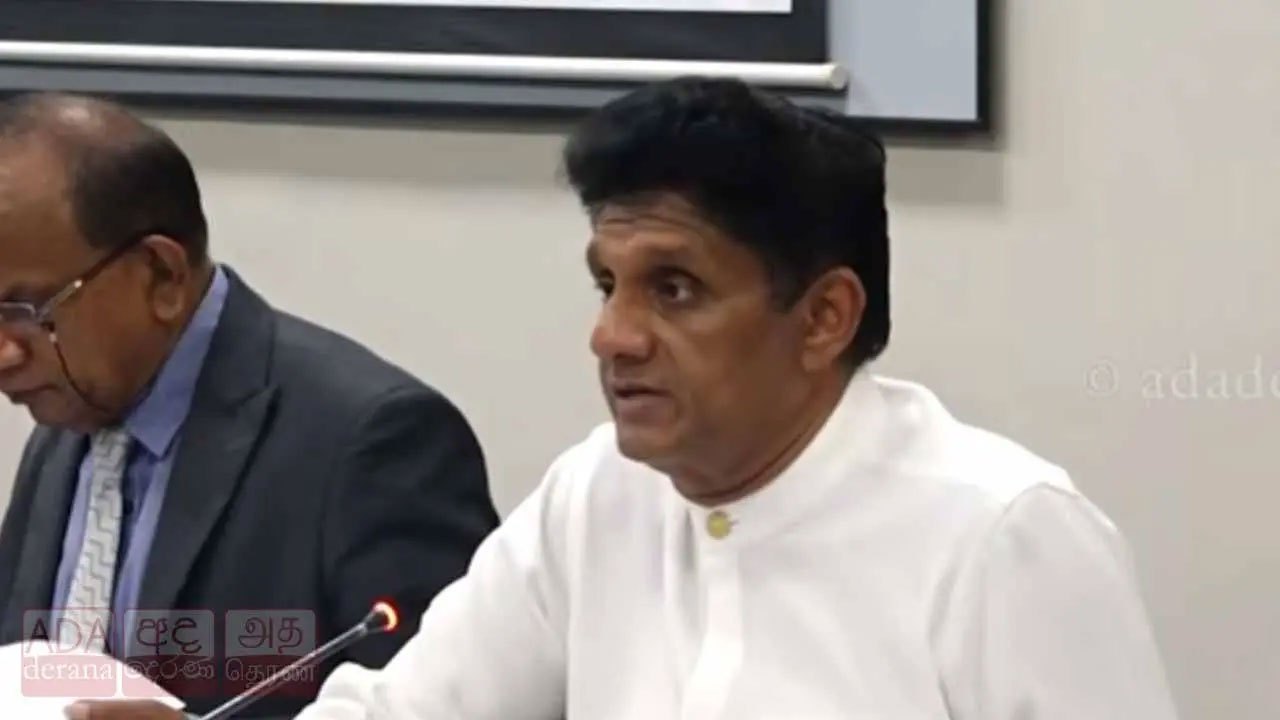
Climate change should be treated as a severe threat to national security rather than only an environmental problem, Opposition Leader Sajith Premadasa told a meeting of the Parliamentary Caucus on Climate Change.
National security is not limited to military security, Premadasa said, pointing to the effects of climate change on the economy, on food and water security, on biodiversity and on human life, Ada Derana reported.
A call for cross-party responsibility
Amid rising costs of goods and services and growing water scarcity, addressing climate change is not something the government can manage alone, he said.
Premadasa said the country’s entire population of 22 million, together with parliament and civil society, must take on the responsibility regardless of party affiliation.
Two proposals
He made two specific suggestions.
The first was to establish environmental societies at divisional secretariat level, to carry environmental and wildlife knowledge into rural communities.
The second concerned elephants. Premadasa said protecting Sri Lanka’s Perahera culture and its elephant population for future generations mattered, and proposed that instead of capturing elephants from the wild, a special elephant pool be created by breeding young elephants from those already domesticated and tamed.
What the report leaves out
Ada Derana did not report who else addressed the caucus, whether government members attended, what the caucus is currently working on, or whether either proposal has any institutional backing. It gave no reaction from the government, the Department of Wildlife Conservation, or the temples that hold licensed elephants.
The elephant proposal in particular raises questions the report does not touch: captive elephant breeding in Sri Lanka has a limited record of success, and the legal framework governing the ownership and registration of tamed elephants has been contested for years.
No other verified newsroom carried the remarks at the time of writing.
Context
The caucus is not new to this framing. It has previously taken up anticipatory governance and El Niño preparedness, and the pressures Premadasa cited are currently live: the government has warned of reduced rainfall affecting hydropower and electricity tariffs, and the Agriculture Ministry has reported thousands of acres of crops damaged by the dry spell.
The security framing also sits alongside a rehabilitation programme now under way on 296 minor irrigation tanks, most of them damaged by Cyclone Ditwah — the same infrastructure that buffers both floods and drought.