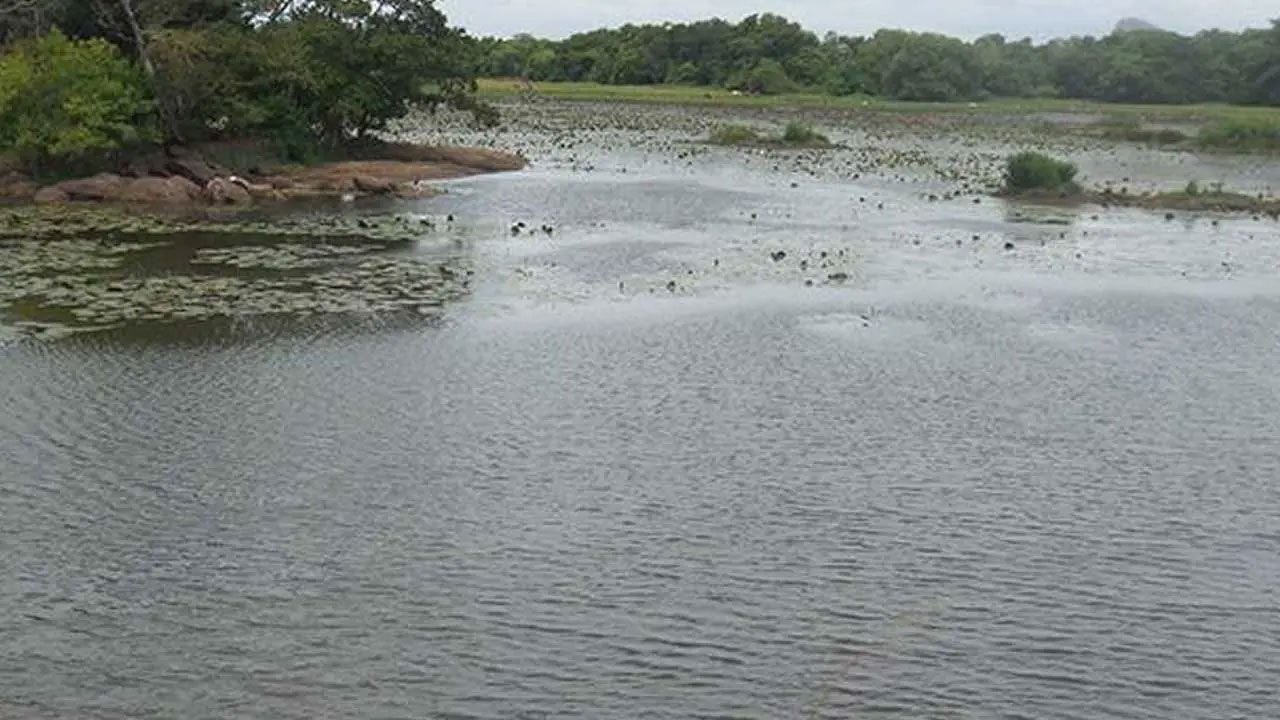
Work has begun on rehabilitating 296 minor irrigation tanks across Sri Lanka with World Bank funding, under a programme with more than Rs. 5.8 billion allocated to it.
The work falls under the Integrated Rural-Urban Development and Climate Resilience Project and runs until 2029, Ada Derana reported.
Two components, very different in size
The programme splits into a routine strand and an emergency one, and the emergency strand carries almost all of the money.
Under the regular rehabilitation component, work has started on six minor tanks managed by the Department of Agrarian Development in the Polonnaruwa, Hambantota and Jaffna districts, with Rs. 256,168,900.88 allocated.
Under the Contingent Emergency Response Component, work has begun on 290 minor tanks across 18 districts damaged by Cyclone Ditwah, with Rs. 5,578,334,825.34 allocated — about 96% of the total.
Where the tanks are
The 18 districts are led by Badulla with 97 tanks, followed by Ratnapura with 29, Mannar with 24, Kurunegala with 19, and Kandy and Vavuniya with 15 each. Ada Derana did not itemise the remaining districts, which together account for about 91 tanks.
The concentration in Badulla and Ratnapura — both wet-zone hill districts — reflects where Ditwah’s rainfall did its damage, rather than the dry-zone districts where minor tanks are most numerous.
What the work is meant to achieve
The Department of Agrarian Development says the rehabilitation should improve the tanks’ water-holding capacity and the efficiency of irrigation distribution, giving farmers a more reliable supply for planting on schedule.
The stated second aim is resilience: strengthening the systems against heavy rainfall, floods and drought so that cultivation can continue through them. The department said the programme should deliver long-term benefits beyond repairing what was damaged, by creating a more sustainable agricultural environment and safeguarding farmers’ livelihoods against climate change.
The projects are being carried out with technical and administrative support from Agrarian Development officials and the cooperation of farmer organisations.
What is not reported
Ada Derana did not say when the 2029 programme is expected to finish its first tranche, how the 296 tanks were selected from the many thousands in the network, what proportion of Ditwah-damaged tanks the 290 represents, or whether the Rs. 5.8 billion is a loan or a grant. No other verified newsroom carried the announcement at the time of writing.
Context
The timing is awkward in a useful way. The rehabilitation is a flood-damage response, but it is being carried out in the middle of a drought severe enough that 612 tanks in Anuradhapura fell below 5% of capacity and the government has warned of reduced rainfall and pressure on hydropower. Restoring storage capacity matters in both directions — the same infrastructure buffers a flood and carries a district through a dry spell.
The cascade system these tanks belong to also featured in Prime Minister Harini Amarasuriya’s address to the Global Conscious Food Systems Summit in Bhutan on Tuesday, where she described the wewa-gama network as a 2,000-year-old model of sustainable resource management.