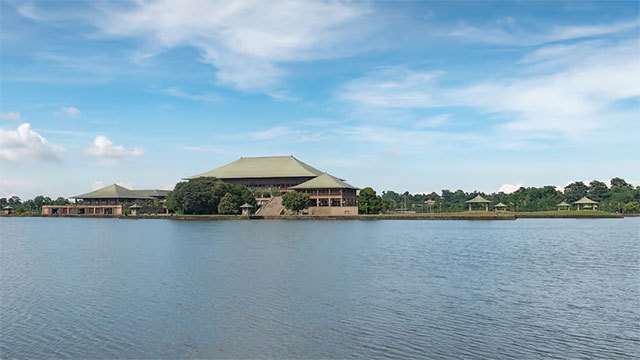
Parliament’s Sectoral Oversight Committee on Infrastructure and Strategic Development has directed officials to seek Cabinet approval for a national programme to control water pollution in Diyawanna Lake and the waterways around the Parliament complex, and to implement it without delay.
The directive was issued when the committee, chaired by MP Ajith P. Perera, met in Parliament to consider the final report of a task force appointed to investigate the discolouration of the lake.
The task force identified the discharge of domestic wastewater, commercial waste and industrial waste into the lake and its surrounding water system as the primary sources of the pollution. It proposed a three-phase management plan covering short-, medium- and long-term measures.
The plan concentrates on identifying and controlling the points where waste is discharged directly into waterways, preventing solid waste from entering water streams, installing wastewater treatment systems, and monitoring water quality on a continuous basis.
The committee also pressed for improved sanitation facilities in low-income settlements, enforcement of the law against individuals and institutions dumping waste illegally, and stronger coordination between the government agencies involved.
Members emphasised that the programme should be treated as a national priority, taken to Cabinet for approval, and carried out expeditiously.
Diyawanna Lake surrounds the Sri Jayawardenepura Kotte parliamentary complex and is one of the most visible water bodies in the Colombo district. The committee’s findings echo those from other urban lakes: authorities investigating pollution at Gregory Lake in Nuwara Eliya likewise traced contamination to untreated sewage and waste entering the water body from surrounding development.
Ada Derana did not report a cost estimate for the programme, a timeline for the three phases, or which agency would lead implementation. No other verified newsroom had reported the committee’s decision at the time of writing.