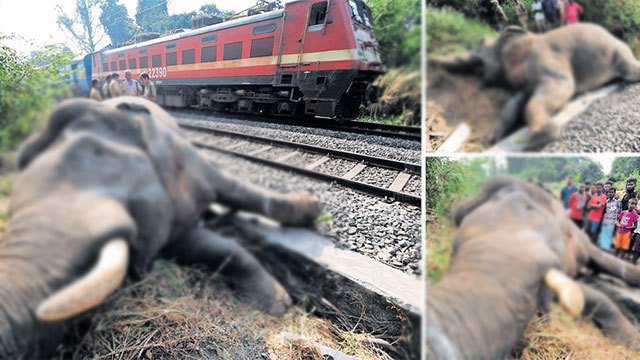
A technology-based system designed to stop wild elephants being struck by trains will be piloted at 13 high-risk locations from next month, under a memorandum of understanding signed at the Presidential Secretariat.
The detection system combines three-beam detection technology, passive infrared (PIR) sensors and automatic temperature sensors, and is calibrated to pick up animals weighing more than 20 kilogrammes. A tamper alarm flags unauthorised interference with the equipment itself.
When an elephant is detected, red, yellow and green signal lights mounted on both sides of the track are triggered, and a dedicated display inside the locomotive cab tells the driver in advance exactly where the animal is. A demonstration was run at the Pinnawala Elephant Orphanage in front of officials, and a report on the system was prepared from that test, Ada Derana reported, citing a statement from the President’s Media Division.
The project runs as a public-private partnership under the “Clean Sri Lanka” programme, bringing together the Railway Department, the Department of Wildlife Conservation and the Forest Conservation Department. It is funded entirely by a state bank — People’s Bank, whose chairman Chandana Guniyangoda signed the MoU alongside Additional General Manager of Railways P.D.S.B. Chandrasena, Director General of Wildlife Conservation M.S.L.R.P. Marasinghe and Conservator General of Forests S.C. Palamakuumbura. The signing was held under the patronage of Secretary to the President Dr Nandika Sanath Kumanayake. A website, slps.lk, is to be launched so the rollout can be tracked live.
Parliament presses for a national policy the same day
Hours later, the Sectoral Oversight Committee on Environment, Agriculture and Resource Sustainability pushed for something the pilot does not supply: a national policy on the human-elephant conflict, drawn up with all relevant stakeholders. Meeting under the chairmanship of MP Hector Appuhamy, the committee reviewed research and policy recommendations from a project run jointly by the Coalition for Inclusive Impact, UNESCO and the Centre for Poverty Analysis, Ada Derana reported separately.
The committee’s emphasis was on causes rather than warnings — the food and water needs of wild elephants, habitat quality inside reserves, and the risk of animals entering settlements when those run short. It called for six identified elephant corridors to be prioritised and gazetted without delay.
That framing matters for judging the pilot. Sri Lanka had recorded 204 wild elephant deaths by mid-August, and railway strikes are only one strand of a toll driven mainly by electrocution and explosive bait. A detection system can prevent a collision once an elephant is already on the line; it does not address why the animal is there. Trackside vigilance has worked before — in May a driver and a wildlife officer stopped a Batticaloa–Colombo train short of an elephant near Habarana — but it depends on someone seeing the animal in time, which is the gap the sensors are meant to close.
Not yet reported
Ada Derana did not name the 13 locations, give the project’s cost or People’s Bank’s contribution, say how long the pilot will run, or state what criteria would trigger a wider rollout. Neither report indicated whether the detection system was considered by the oversight committee.