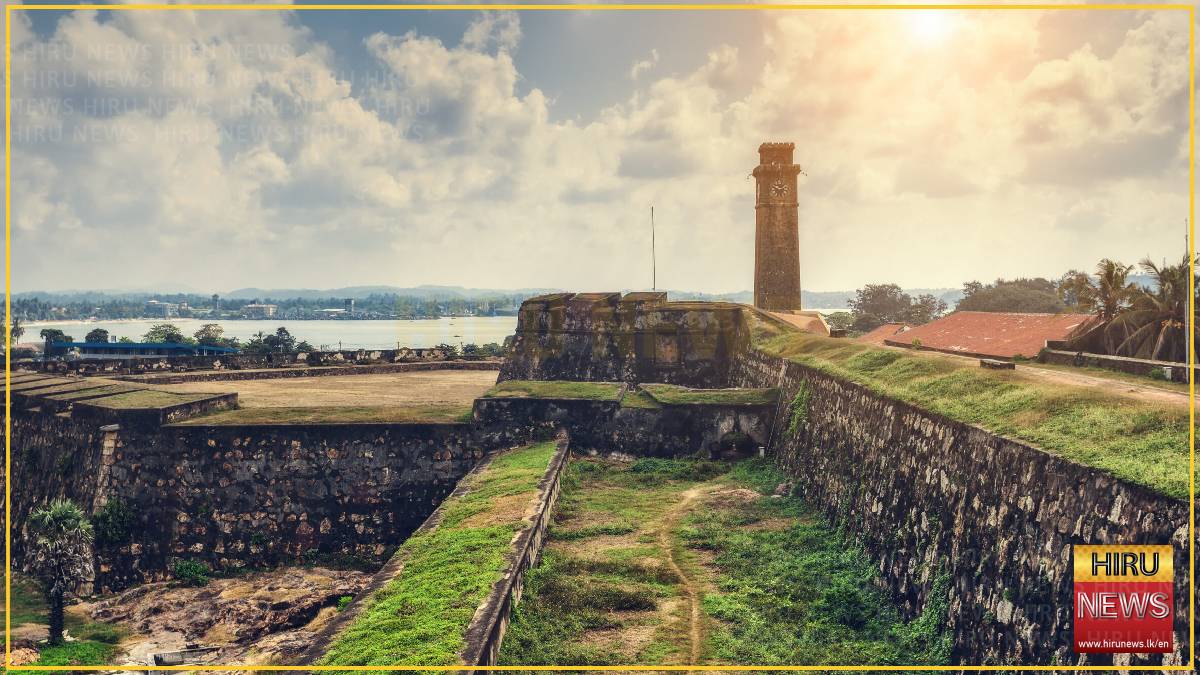
The Galle Municipal Council has begun clearing and restoring the underground drainage network beneath Galle Fort, a piece of 17th-century Dutch engineering that has spent centuries silting up out of sight.
Built during the Dutch colonial period, the system handled both sewage disposal and rainwater management, and is regarded as one of the fort’s most sophisticated pieces of early urban infrastructure. It was constructed from black stone and brick in a strong arched form, built to survive a coastal environment.
Its most striking feature is that it was designed to clean itself. According to officials, the network was engineered to be flushed naturally twice a day, using the movement of tides and waves to carry away wastewater and accumulated material — a design that treated the sea as part of the machinery rather than as a hazard to be walled out.
Sand, debris and other material have gradually obstructed sections of the network over the centuries, reducing how well it works. The council’s work is intended to clear those blockages and return the system as far as possible to its original condition.
The restoration matters on two counts: it improves working drainage inside the UNESCO-listed fort, and it preserves a largely hidden part of its architectural and engineering heritage. Visitors to Galle Fort are drawn to the ramparts, the streets and the colonial-era buildings above ground; much of what allowed the settlement to function in the first place lies beneath their feet.
Not reported
Hiru News did not say when the work began, how long it is expected to take, what it costs, or whether the Department of Archaeology or the Urban Development Authority is involved alongside the municipal council — a question that carries weight inside a World Heritage site, where intervention is normally subject to archaeological oversight. Nor did it say what prompted the work now, after centuries of accumulation. No other verified newsroom had covered the restoration at the time of writing.