World food prices rose in August to their highest level since late 2022, the United Nations’ Food and Agriculture Organization said on Friday, as extreme weather, the Black Sea war and disrupted trade logistics converged on global supply.
The FAO Food Price Index, which tracks monthly changes in a basket of internationally traded food commodities, averaged 133.3 points in August, up from July’s revised reading of 130.8. That is the highest score since November 2022, though still nearly 17 per cent below the record peak set in March 2022 after Russia’s full-scale invasion of Ukraine. Al Jazeera described it as a four-year high and the third consecutive monthly increase.
All five sub-indices — cereals, vegetable oils, sugar, meat and dairy — rose in the month.
Sugar led the increase
The sugar index jumped 11.9 per cent, its highest since June 2025. FAO attributed the surge to expected lower sugar beet yields in the European Union after adverse weather, concerns over El Niño’s effect on production in key Asian producing countries, reduced output in Brazil’s centre-south region, and India’s announcement of duty-free raw sugar imports.
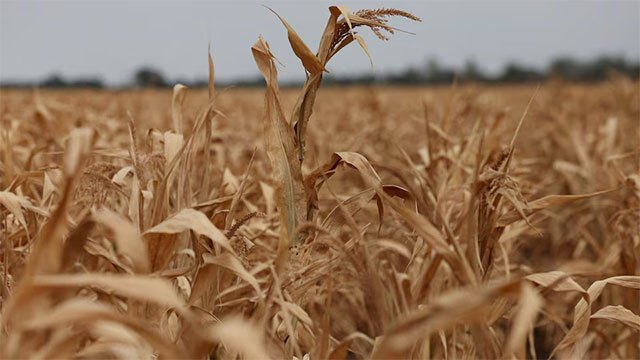
The cereals index rose 2.2 per cent to its highest since May 2024. Within it, wheat prices rose 2.6 per cent and were 15.0 per cent above their year-earlier level, on persistent disruption to Black Sea export logistics and hot, dry weather across much of Europe. Maize rose 2.5 per cent, pushed by deteriorating yield prospects in the United States and European Union and by input disruption following the closure of the Strait of Hormuz. The All Rice Price Index rose 0.5 per cent, underpinned by sustained purchasing from Asian and African countries.
Meat rose 1.0 per cent and dairy 2.3 per cent, the latter on tightening EU milk supplies during hot and dry weather.
“August’s increase in global food prices is a warning that the risk premium is returning to food markets: climate shocks, geopolitical tensions and disrupted trade logistics are converging to tighten supply expectations,” said FAO Chief Economist Maximo Torero.
Al Jazeera reported that the World Food Programme has warned El Niño could push a further 50 million people into acute hunger by the end of next year.
A discrepancy on vegetable oils
The wire report carried by Ada Derana and Hiru states that the vegetable oil index “edged up 0.6 per cent” to its highest since June 2022. FAO’s own release puts the increase at 1.1 per cent, citing higher palm and soy oil prices on strong import demand and concern over El Niño conditions in Southeast Asia. The two figures cannot both be right; this article reports the primary document’s number alongside the wire’s, and no outlet has flagged the difference.
Production forecasts cut
In a separate report, FAO cut its 2026 global cereal production forecast by 3.4 million tonnes from its July estimate to 2.980 billion tonnes — 2.0 per cent below 2025 and the largest annual decline since 2018, though still the second-largest outturn on record.
World cereal stocks at the close of the 2026/27 seasons were revised down 1.1 per cent to 947.2 million tonnes, leaving the stocks-to-use ratio at 31.6 per cent against 31.9 per cent a season earlier — which FAO still calls a relatively comfortable supply position by historical standards. Global rice output is expected to fall 1.9 per cent to 553.1 million tonnes, largely on El Niño-related weather.
Why this matters in Sri Lanka
Sri Lanka imports the whole of its wheat requirement and a large share of its sugar, so both of August’s sharpest movers pass through to domestic prices directly.
The sugar reading lands in a month when the Sevanagala sugar factory halted production and its workers took their case to the minister, and shortly after Cabinet approved a sugarcane cooperation agreement with Brazil — the country whose reduced centre-south output FAO names among the causes of the global increase.
The El Niño pattern FAO cites for Asian sugar, palm oil and rice is the same one already damaging local cultivation: the Department of Agriculture puts crop losses at 8,000 to 8,500 acres, the government is paying compensation to more than 88,000 affected farming families, and the Meteorology Department has warned of hotter, drier conditions into early 2027.
Domestic price administration is already moving: the Consumer Affairs Authority this week gazetted maximum retail prices for locally produced canned fish.
What is not reported
Neither the wire report nor FAO’s release addresses country-level pass-through, so there is no published estimate of what the August index means for Sri Lankan retail prices. No local outlet has connected the global sugar move to the Sevanagala closure or the Brazil agreement, and no government body has commented on the index.
Sources
- World food prices at highest since 2022 as supply risks mount, FAO says — Ada Derana, September 4
- Global food prices surge to 2022 levels — Hiru News, September 4
- Conflicts and extreme weather pushing global food prices higher, warns UN — Al Jazeera, September 4
- Supply concerns drive FAO Food Price Index higher in August — FAO, September 4