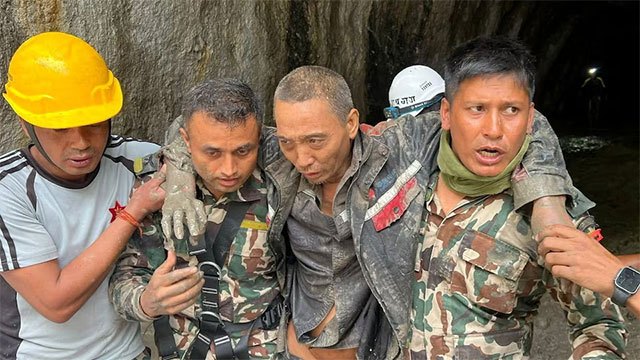
A Chinese national was pulled alive from a hydropower tunnel in Nepal on Saturday, 10 days after a wall of ice, rock and mud tore through a Himalayan valley, the authorities said.
The Nepali army said the man was rescued from the same tunnel on the Trishuli River where two Nepali workers were brought out alive the day before, Ada Derana reported, carrying Reuters copy. Hiru News carried the same account, headlining him as the third survivor recovered from the submerged tunnel.
He is the first foreign national reported rescued from the tunnels.
The toll has climbed sharply
The wire reports now put the disaster at more than 1,300 people killed and over 5,600 missing — a steep rise from the 675 dead recorded in the official count on August 30.
Rescue workers believe the August 26 collapse of a glacier on the upper reaches of the river trapped at least 900 people in tunnels connected to six hydropower projects.
That figure differs from the one Nepali authorities were using earlier. When teams turned to controlled blasting on September 1, the search was described as covering 933 workers across 11 hydropower projects in Rasuwa and Nuwakot districts. Neither report explains the change, and it is not clear whether the narrower figure reflects a revision, a different definition of which sites are still being searched, or simply a rounder wire summary.
Sri Lanka’s involvement
Sri Lanka approved a US$1 million aid package for Nepal at cabinet on September 1 and deployed relief teams at the end of August. A Sri Lankan family related to former cricketer Muttiah Muralitharan remains among those unaccounted for.
Not reported
Neither outlet names the rescued man, gives his age or employer, or says what condition he was in. Both carry identical wire text, so there is no independent account of how the rescue was carried out, how long the three survivors had been in the chamber, or whether more people are believed alive at the same location. No update was given on the controlled-blasting operation at the other tunnels.