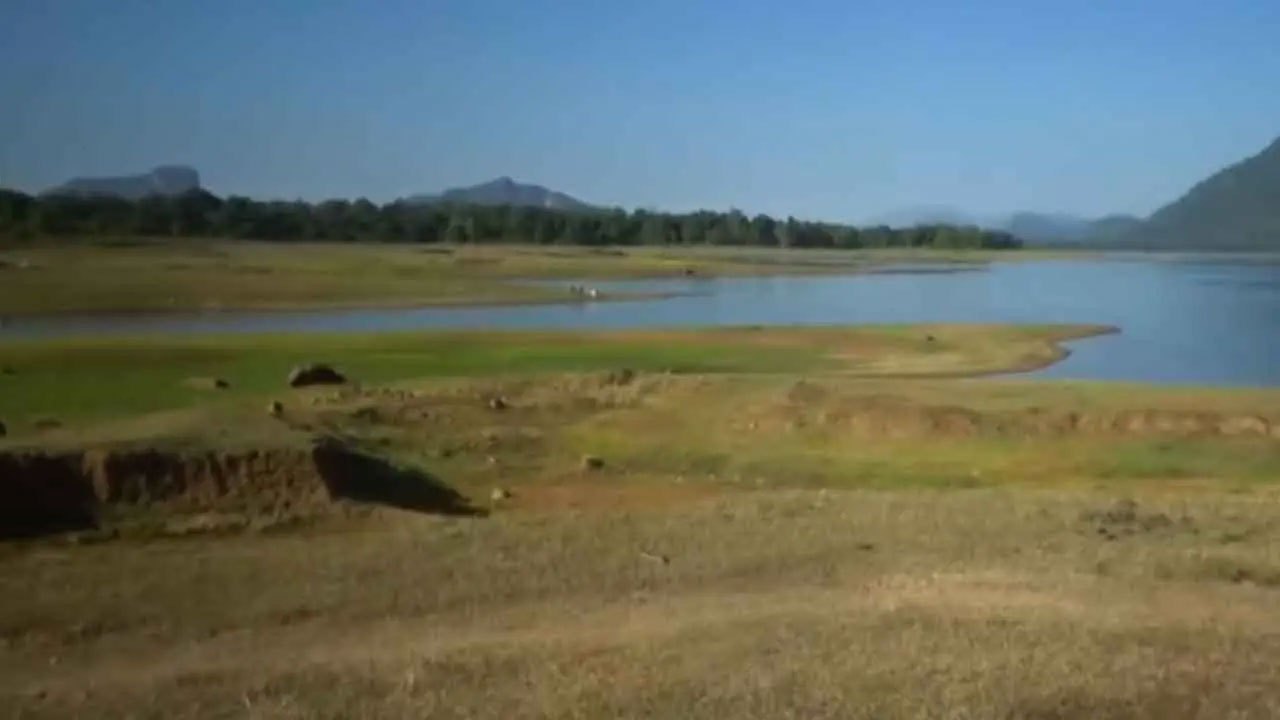
Water in the nine major irrigation reservoirs of the Ampara District has fallen to 21.5% of capacity and the four major reservoirs in Batticaloa to 25.3%, the Irrigation Department said on Sunday, as the dry spell across the Eastern Province continues.
The decline has raised concerns over water for agriculture and other essential needs in the district, Ada Derana reported.
The slide has slowed considerably
The figures are lower than the last full dataset — but only just. On August 26 the same nine Ampara tanks stood at 22.0% and the four Batticaloa tanks at 25.8%, as reported in the islandwide reservoir count.
Eleven days later, Ampara has lost 0.5 percentage points and Batticaloa 0.5. That is a markedly flatter trajectory than August, when the islandwide figure fell from 39% on August 4 to 35% by the 26th. Neither outlet notes the change of pace.
The national picture, district by district
The Sunday Times published the fuller dataset the same day, attributing the district figures to Irrigation Director General Dr K. Weligepolage, who put the big reservoirs the department manages at about 34% overall.
By district: Puttalam 63%, Kandy 61%, Anuradhapura 45%, Badulla 38%, Polonnaruwa 37%, Mannar 34%, Hambantota 33%, Trincomalee 26%, Batticaloa 25% and Ampara 22%. The Ampara and Batticaloa readings round to Ada Derana’s more precise figures.
Agriculture, Livestock, Land and Irrigation Ministry Secretary D. P. Wickramasinghe said more than 80% of the country’s reservoirs are now below half capacity, and that around 170 small tanks under the Agrarian Development Department have dried up completely.
An assessment covering roughly 13,000 minor tanks found about 57% holding less than 27% of capacity and only around 4% above 75%. A further 24.5% were placed in a 25–50% band that overlaps the first figure, so the three groups as published do not form a clean split.
Mahaweli Authority Deputy Director K.L.I.C. Kariyawasam said about 63% of capacity remains in the upper-basin reservoirs used for electricity generation, and about 49% in the Mahaweli irrigation reservoirs — Udawalawe, Maduru Oya, Moragahakanda and Kala Wewa. Across the Mahaweli system, roughly 3,000 million cubic metres of a 5,489 million cubic metre total capacity is available.
The two accounts disagree on what the numbers mean
Ada Derana presents the Eastern Province figures as evidence of worsening pressure on water and agriculture. The Sunday Times quotes the Irrigation Director General saying the same levels are sufficient for the ongoing Yala cultivation season, and sufficient to supply the areas that draw drinking water from those reservoirs until rain arrives.
Neither report acknowledges the other reading. The difference is one of interpretation rather than data — the underlying percentages agree.
Rain arrived in two districts
Several areas of Polonnaruwa and Monaragala received rainfall on Sunday, giving temporary relief, though the Department of Meteorology expects hot and dry conditions to continue through the coming week. That is consistent with the department’s forecast of showers above 75mm in Uva and Eastern provinces issued earlier the same day.
Monaragala remains among the worst-affected districts, with a large number of small tanks already completely dry.
The Sunday Times also carried the Meteorology Department’s medium-range outlook — El Niño active until February, with heavy rain possible from October — which the department set out in more detail on September 4.
Tube wells being repaired in 48 divisions
On drinking water, the Siyambalanduwa Pradeshiya Sabha and the National Water Supply and Drainage Board have begun repairing tube wells across 48 Grama Niladhari divisions in the Siyambalanduwa Divisional Secretariat Division.
Relief agencies counted 115,534 people affected by dry weather across seven districts on September 5.
Not reported
Neither outlet names the nine Ampara or four Batticaloa reservoirs individually, nor gives their acre-foot volumes. No date is given for when Yala releases end or what happens to supply after that. Neither report says how many tube wells the Siyambalanduwa programme covers, what it costs or when it completes, and no outlet reconciles the Irrigation Department’s “sufficient” assessment with the concerns Ada Derana attributes to the same figures.