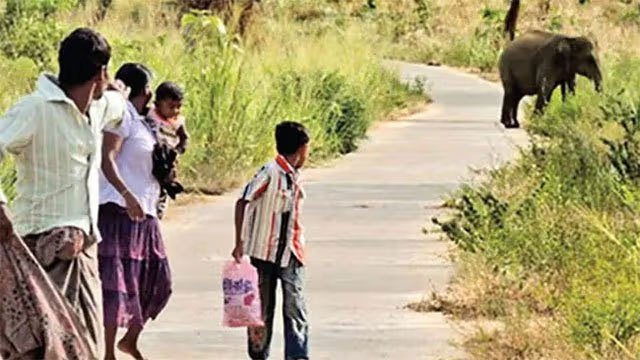
The Department of Wildlife Conservation says human-elephant conflicts have fallen significantly this year compared with last year.
Director General Ranjan Marasinghe said that according to data recorded up to August 21, a total of 207 wild elephants have died and 88 people have lost their lives in human-elephant conflict so far in 2026, Ada Derana reported.
Marasinghe urged the public to stay vigilant, noting that elephant movement has increased because of the prevailing dry weather.
What the numbers show against the Department’s own earlier releases
The Department did not publish a previous-year comparison, so its central claim cannot be checked directly. Its 2026 figures, however, can be set against its earlier releases this year.
Elephant deaths ran at 108 through 25 April, 180 through 14 July and 204 through 14 August. The move from 204 to 207 is three deaths in the seven days to August 21 — about 0.43 a day, against roughly 0.90 a day across the year to date and the one-elephant-a-day rate that has framed the conflict since April.
That is a genuine slowdown in the most recent week of data, though a single week is a thin basis for a trend.
The human figure moves the other way
The toll on people does not follow the same curve. The Department recorded 35 human deaths through 25 April and 56 through the first seven months. The 88 now given for the period to August 21 is 32 more in roughly three weeks — against 21 additional deaths across the preceding three months.
Either the pace of fatal encounters has risen very sharply since the end of July, or the basis of the count has changed between releases. Ada Derana’s report does not address the jump, and no other outlet has published the August 21 dataset.
The dry-weather link Marasinghe cites is consistent with the second half of that picture: water stress pushes herds beyond their usual range and into cultivated land. The Department of Meteorology and the Disaster Management Centre currently record more than 115,500 people affected by dry weather across seven districts.
The same briefing, reported the other way round
Marasinghe’s remarks were carried by two newsrooms with opposite emphasis. Ada Derana led on the year-on-year decline; the Daily Mirror led on a forward-looking warning that El Niño conditions could increase the risk of elephants entering human settlements in search of food and water, reporting the same briefing.
Both accounts are consistent — the decline is a record of what has already happened, the warning is about what the dry season may still bring — but read alone, either gives a misleading impression of the Department’s position. The Daily Mirror names the driver as El Niño where Ada Derana refers only to prevailing dry weather.
Marasinghe urged particular caution when travelling at night in conflict-affected areas. He said the effects of El Niño were also being felt in marine ecosystems, raising concerns over coral reefs, and that a conservation and restoration programme has been initiated. Several zones of Yala National Park have been considered for temporary closure because of the weather — the Department has already announced the closure of Blocks 1 and 2 from September 14 to October 15. He also commented on recent elephant attacks and reported poacher entry into Yala.
The Daily Mirror account carries no figures, so the August 21 dataset remains single-sourced.
Context
Sri Lanka’s wild elephant population was estimated at 7,451 in the 2024 national survey. On that base, the 207 deaths recorded to August 21 represent close to 2.8% of the population in under eight months.
The Department has not released a cause-of-death breakdown for the latest figures. In the August release, shootings (33), electrocution (26) and “hakka patas” explosive bait (26) led the itemised causes.