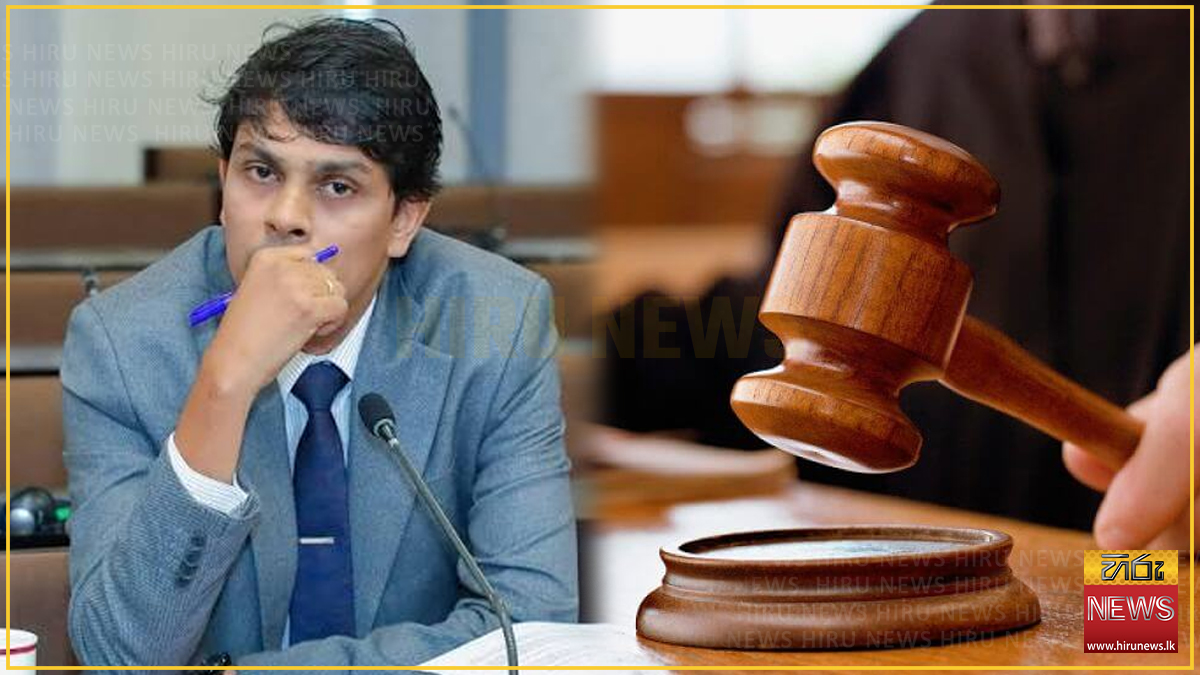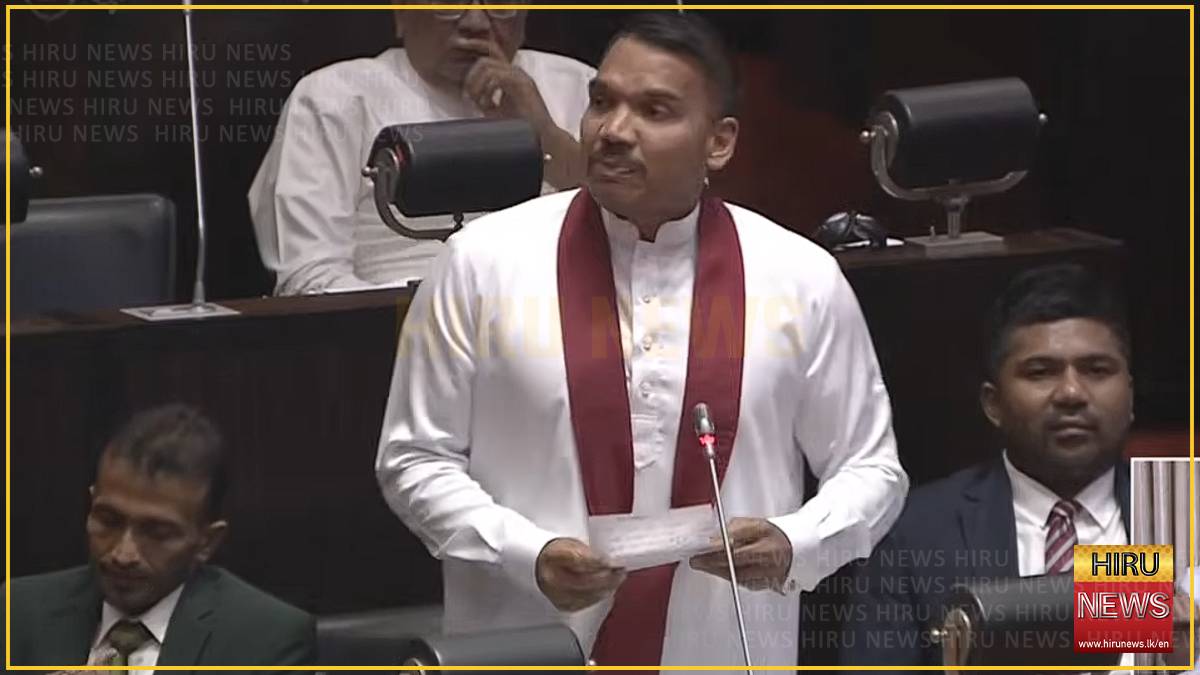
Sri Lanka Podujana Peramuna National Organiser and MP Namal Rajapaksa arrived at Parliament in a prison bus on Tuesday to take his seat for the September sitting week, days after he was remanded in the Bribery Commission’s Airbus investigation.
The bus carrying him pulled into the Parliament complex under heavy security. Asked by reporters at the entrance about his situation, Rajapaksa declined to answer there. “I will say it in Parliament. I can’t do it here,” he told journalists.
The Secretary General of Parliament had written to the Commissioner General of Prisons on Monday asking that arrangements be made for the MP to attend, and he was produced by the Prisons Department under those arrangements. Parliament is scheduled to sit until September 11.
What he said — and what he left out
When he did speak, Rajapaksa made no reference at all to his arrest or to the case against him. Hiru News, reporting on his address to the House, noted that he did not raise either subject during the speech.
Instead he accused the government of misleading the public and failing to deliver on its promises, and argued that cutting the cost of living and providing relief to households under economic pressure was an urgent necessity.
His sharpest attack was on health policy. Responding to a remark by President Anura Kumara Dissanayake that Sri Lankans should reduce the number of their hospital visits, Rajapaksa said the government should not suppress the right to seek treatment.
“President Dissanayake has said the annual visits to hospitals in Sri Lanka is found to be 80 million. He has told the people to use traditional medicines such as coriander instead of seeking hospital treatment. This is a suppression of the people’s right to seek hospital treatment,” he said.
Villagers had no alternative to their local hospitals, he argued, adding that “village people cannot afford luxurious hospitals like the ministers.” He said there was a shortage of life-saving drugs including cancer medicines, that dengue cases had passed 100,000, and that the government should supply those drugs.
He also asked what had become of the government’s election pledge to build 50 new universities — a promise that FUTA, the university teachers’ federation, separately criticised on the same day while announcing a one-day strike.
Context
Rajapaksa was arrested and remanded on September 4 after appearing before the Commission to Investigate Allegations of Bribery or Corruption over the Airbus matter. His attendance on Tuesday followed permission granted for him to sit while in remand custody.
Neither report gives the standing order or statute under which a remanded member is produced at Parliament, and neither describes what escort arrangements applied inside the chamber.
Update (September 16): the Health Minister answers the coriander charge
Eight days after Rajapaksa’s attack, Health Minister Dr. Nalinda Jayatissa responded to the criticism the President’s remarks had drawn, saying Dissanayake had been referring to reducing unnecessary visits to tertiary hospitals for primary healthcare needs, the Daily Mirror reported.
Congestion at outpatient departments and clinics in National and Base Hospitals had reached “unbearable” levels, the Minister said, with people seeking treatment for conditions that could be managed at primary healthcare facilities. He said the government was taking steps to strengthen primary care, and that this was the approach followed in many countries — citing India’s Ayush health centres as an example of a comparable system.
The report also sets out what the President had actually proposed, which the earlier coverage of the row did not. Under the new primary-healthcare-based system, patients would not be able to independently choose a hospital or specialist for every condition. They would first consult a primary-care doctor, who would assess them and refer them upward to a higher-level facility or a specialist where necessary.
That is a gatekeeping model rather than an instruction to stay at home, and it reframes the dispute. Rajapaksa’s charge was that the government was suppressing the right to seek treatment; the Minister’s answer is that it is redirecting where treatment begins. The Daily Mirror notes only that “a wide backlash emerged” following the President’s remarks.
The clarification still leaves the specific remark unaddressed. Neither the Minister nor the report disputes that the President referred to coriander — the traditional household remedy — or explains the context in which he did so, and no report gives the full text of what he said.
Update, 9 September: the silence itself becomes the argument
The most-noted feature of Tuesday’s speech — that Rajapaksa spoke for its full length without once mentioning his own arrest — was taken up on the floor of Parliament the following day, and both sides claimed it.
Deputy Minister of Justice Sunil Watagala said he had expected Rajapaksa to speak about his arrest and about the conduct of the judiciary, and did not.
SLPP MP Chanaka Madugoda answered that the omission was deliberate and procedurally correct: Rajapaksa avoided the subject because discussing a matter pending before court would be sub judice, and he was “well aware of the Standing Orders of Parliament.” Madugoda said Rajapaksa had acted in accordance with parliamentary procedure by declining to comment while the matter was before the courts.
Madugoda then extended the point into an attack, contrasting Rajapaksa’s observance of the rules with what he called the record of “certain government members who had a history of attempting to bomb Parliament and set fire to the premises” — a reference to the insurrection-era past of figures now in the governing benches.
What the exchange establishes. Nothing about the Airbus case itself. What it does show is that the silence was a strategy rather than an oversight, and that the government reads the same silence as an evasion of accountability for remarks the SLPP has made about the judiciary elsewhere. The party has separately argued this week, through General Secretary Sagara Kariyawasam, that the evidence against Rajapaksa is not credible — a claim made outside the chamber, where the sub judice constraint Madugoda invoked does not bind in the same way.
The report does not say whether the Speaker ruled on the point, or whether Watagala responded to Madugoda’s characterisation of government members.