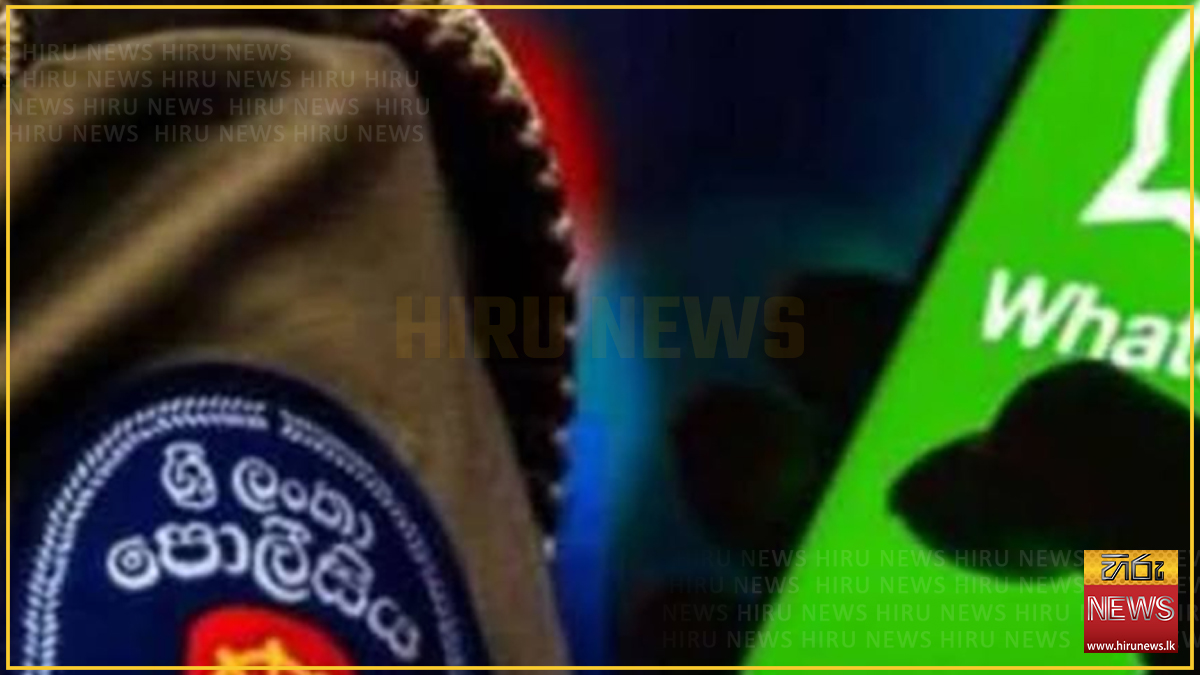
Sri Lanka Police have launched a WhatsApp video calling facility under the 119 Emergency Call Unit so that deaf and hard-of-hearing callers can lodge complaints, Police Headquarters announced. The service comes into operation on 10 September, Hiru News reported.
The facility was inaugurated by the President to mark the 160th Police Day, which fell on 3 September.
How the temporary route works
A dedicated short code for the hearing-impaired community has not yet been introduced. Until it is, Police Headquarters has set out a step-by-step workaround:
- Save the number 011-2809980 to the phone’s contacts.
- Place an audio call to that number through WhatsApp.
- The call disconnects automatically, which triggers a link sent to the caller’s phone.
- Open the link, return to WhatsApp, select “Join Browser”, then “Join Meeting” to connect to a live video session and submit the complaint.
The gap it addresses
The 119 line is a voice service, which has effectively excluded deaf callers from the country’s main police emergency number. Routing them to a video channel allows complaints to be made in sign language rather than through a third party.
The four-step sequence is, on its face, demanding for an emergency: it requires the number to be saved in advance, a call that is meant to fail, and two further taps inside a browser handoff. Saving the contact before it is needed is the part that matters most.
Police Headquarters framed the launch as a measure to protect rights and widen emergency accessibility. It has not said when the dedicated short code — which would collapse those steps into a single dialled number — is expected.
Update, September 9: who answers the call
Two further newsrooms have now carried the announcement, and NewsFirst supplies the detail that determines whether the service works in practice: a specially trained officer attached to the 119 Emergency Call Division, with knowledge of sign language, will respond to the video calls.
That answers the question this report left open — whether the unit taking the calls is staffed to hold a conversation in sign language, or whether deaf callers would reach an officer who could see them but not understand them. On the police account, it is the former.
NewsFirst also sets out what happens after the call connects: the information given is forwarded to the nearest police station, which is then responsible for responding. The video channel is a reporting route into the existing dispatch chain rather than a parallel service.
The Daily Mirror confirmed the number, the four-step sequence and the September 10 start, and attributed the announcement to the Police Media Division. Neither outlet gave a date for the dedicated short code, said how many sign-language-capable officers the 119 division has, or said whether the service is staffed around the clock — which, for an emergency line, is the question that follows.