An Iranian commercial container ship was struck by a projectile in the Strait of Hormuz early on Sunday, killing one crew member, days after Saudi Arabia shut the pipeline that has carried most Gulf oil to market since the strait closed.
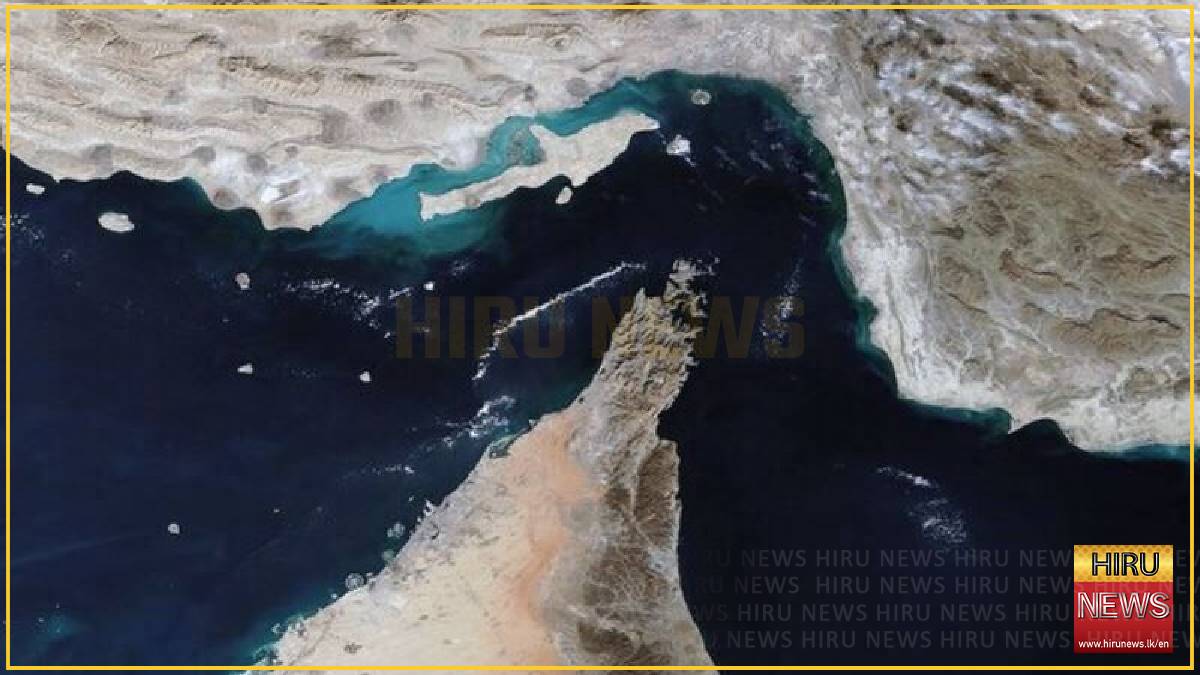
The vessel was hit near Hengam Island, off Qeshm, with 10 crew aboard, Qeshm Island governor Hossein Amir-Teymouri said in remarks carried by Hiru News from the Iranian state agency IRNA. The dead crew member was named as Jamshid Rajabi. The governor said the projectile was unidentified, that its origin and nature had not been established, and that an investigation was under way.
The British navy-affiliated UKMTO separately reported a projectile hitting a vessel as it moved through the strait, with the crew evacuated by local authorities after a fire broke out, the Daily Mirror reported, citing Reuters.
The casualty count differs between the two accounts. Iranian state media told Reuters one person was killed and three wounded; the Qeshm governor put the injured at four. Neither account attributes the strike to any party.
The pipeline closure
Saudi Arabia temporarily closed its East-West pipeline as a precaution after a drone attack that both Baghdad and Riyadh said originated in Iraq.
The 1,200km (746-mile) line runs from the Abqaiq oilfield in the east to Yanbu on the Red Sea, and was hit in the Riyadh and Medina areas by drones launched from Iraq’s southeastern Maysan province, Al Jazeera reported. The Saudi Foreign Ministry said the strike caused injuries and damage that was being assessed, without detailing the effect on exports. Satellite images showed black smoke rising south of Medina. No party claimed responsibility. US President Donald Trump, in Ireland for a golf tournament at one of his resorts, said Iran was probably to blame.
The pipeline matters because it has been the main route out for Middle East oil for roughly six months while the Strait of Hormuz has been largely shut — closed since March. It had been moving 4 to 5 million barrels per day, or 4 to 5 per cent of global supply, sparing Saudi Arabia the disruption that has crippled other Gulf exporters.
The wider front
Saudi Civil Defence said on Saturday that a Houthi projectile injured two people in the Jazan region and damaged several buildings including a mosque — an escalation reported alongside the Sharurah base attack. Houthi-run Al Masirah TV said Saudi Arabia carried out three airstrikes on the al-Rubaie area of Taiz province in south-western Yemen, with no Saudi confirmation. The Houthis said there had been 129 Saudi airstrikes in 48 hours.
Why it matters here
Brent crude breached US$100 a barrel this month and Al Jazeera put it above US$104 on Saturday. US retail diesel has passed a record US$6 a gallon.
Sri Lanka imports effectively all its crude and refined fuel, so the pipeline closure feeds directly into the import bill. The Ceylon Petroleum Corporation said this week it has no immediate plan to raise pump prices, while private distributors have asked the government to restore cost-reflective pricing, saying they are losing about Rs. 170 a litre. Shipping costs are also climbing, with the industry bracing for a years-long war.
Not reported
No account identifies the struck vessel by name, says who fired the projectile, or reports where the ship was taken after the fire. None says how long the East-West pipeline will stay shut, what volume of Saudi exports is affected, or whether repairs have begun. No outlet reconciles the three-wounded and four-injured figures.
Sources
- New report of attack on Strait of Hormuz shipping fans fears of threats to oil supplies — Daily Mirror, September 13
- Projectile hits Iranian commercial vessel in Strait of Hormuz, killing one, injuring four — Hiru News, September 13
- Saudi Arabia shuts critical oil pipeline after drone attack: What it means — Al Jazeera, September 12