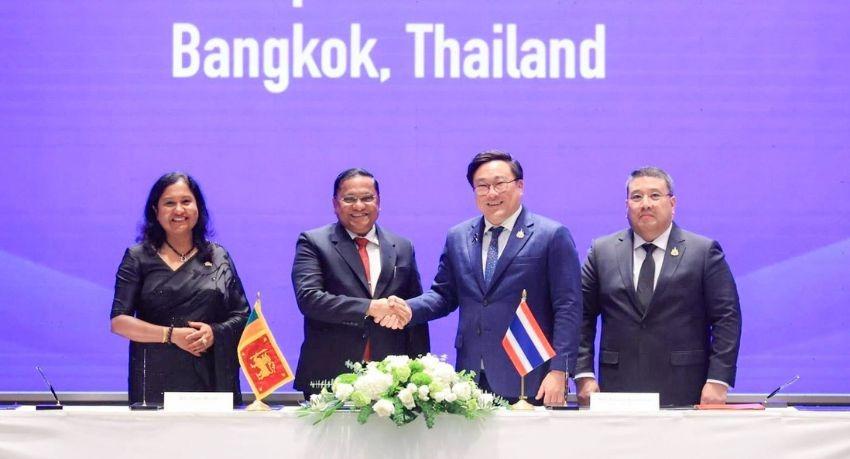
Sri Lanka and Thailand signed two labour agreements in Bangkok on Monday, creating a formal channel for Sri Lankans to work in Thailand and confirming Thai approval for an initial intake of 10,000 workers.
The texts were signed by Minister of Foreign Affairs, Foreign Employment and Tourism Vijitha Herath and Thailand’s Minister of Labour, Julapun Amornvivat, on the first day of Herath’s three-day official visit.
What was signed
Two instruments, both cleared by Cabinet on September 8:
- A Memorandum of Understanding on Labour Cooperation, covering labour policy and practice, exchange of labour market information, skills development, labour productivity, worker protection, and measures against illegal recruitment and human trafficking.
- A Memorandum of Agreement on the Employment of Sri Lankan Workers in Thailand, setting the operational machinery: recruitment procedures, employment contracts, visa and work permit processing, legal protection, welfare, and return and repatriation arrangements.
Julapun said workers recruited under the framework would hold equal rights and protections under Thai labour law, including legally mandated wages, employee benefits and healthcare.
The 10,000 figure is not new
Every outlet reported the Thai Cabinet’s approval of 10,000 workers as an outcome of the signing. It is not.
The Island reported on 15 February that the Thai Cabinet had already approved the recruitment of 10,000 Sri Lankan workers, as a pilot project, when officials from the two countries concluded negotiations on the draft texts through a series of virtual sessions. That report also named the sectors the pilot targets — construction, agriculture and livestock, food and beverage, industry, educational institutions, aquatic animal processing and mining — a breakdown none of today’s reports carry. It said the negotiations were facilitated by Sri Lanka’s Embassy in Bangkok under Ambassador and Permanent Representative Wijayanthi Edirisinghe, with Ministry of Labour and Sri Lanka Bureau of Foreign Employment officials taking part.
That February report is outside the 72-hour window and is cited here as background only, not as a source.
It also recorded that the signing was expected “at ministerial level in the first quarter of 2026.” It happened in the third. No outlet has reported the delay or explained it.
What Herath asked for
Herath pressed for the framework to go further than the pilot. He asked Thailand to consider opening information technology and tourism roles to Sri Lankans, particularly young people, and called for a Joint Working Group to oversee, monitor and review implementation — a body none of the reports say has been established.
In a post on X quoted by the Daily Mirror, he called the agreements “a significant milestone in diversifying employment opportunities for Sri Lankans and deepening Sri Lanka Thailand relations.”
The timing cuts both ways
The signing lands one day before Sri Lankan passport holders lose visa-free entry to Thailand on September 15.
The MoA’s “visa and work permit” provisions apply to recruited workers, not to ordinary travellers. The separate bilateral tourist-visa arrangement Bangkok proposed — referred to the Attorney General’s Department and which Herath said he expected to raise on this trip — is not mentioned in any of today’s reports.
Not reported
No outlet gave a start date for recruitment, said which Sri Lankan agency will handle placements, or set out wage levels, contract lengths or recruitment costs to the worker. None said whether the 10,000 remains a pilot, whether the sector list from February still stands, or what the MoU’s duration is — Cabinet approved a five-year term, but no report confirms the signed text matches. None reported how many Sri Lankans currently work in Thailand, and none put the visa question to Herath.
Sources
- Sri Lanka Secures 10,000 Jobs in Thailand Under New Labour Agreement — NewsFirst, September 14
- Sri Lanka, Thailand sign landmark agreements to strengthen labour cooperation — Daily Mirror, September 14
- Thailand to recruit 10,000 Sri Lankan workers: Vijitha Herath — Daily Mirror, September 14
- Sri Lanka, Thailand sign two labour pacts — Hiru News, September 14