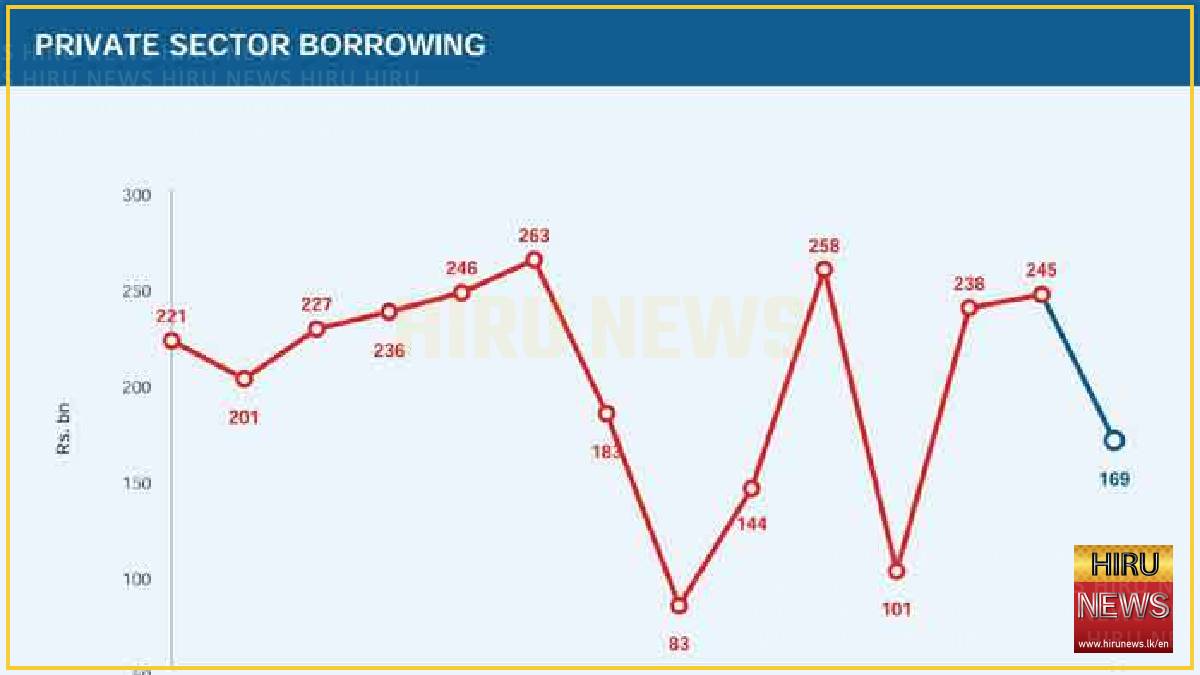
Net credit extended to the private sector by Sri Lanka’s banking system slowed to Rs. 169.1 billion in July, a 31% drop from the Rs. 245.3 billion recorded in June, according to provisional Central Bank data reported by the Daily FT and Hiru News.
The slowdown is in the monthly flow, not the stock. Total outstanding credit to the private sector still reached Rs. 11.45 trillion, with annual growth easing to 26.4% — a rate that remains high by recent standards.
Where the lending went
Domestic Banking Units accounted for the bulk of July’s expansion, rising Rs. 158 billion month-on-month to Rs. 10.86 trillion.
Net credit to the government from the banking system moved the other way, contracting by Rs. 165.9 billion to Rs. 7.83 trillion. That contraction is notable in the same month the budget swung to a Rs. 119.23 billion deficit: the government ran a shortfall while reducing what it owed the banking system, implying it funded the gap elsewhere — most visibly through the securities market, where the Public Debt Management Office has continued to place large treasury bond volumes.
Net foreign assets of the banking system rose Rs. 253.3 billion to Rs. 1.52 trillion, taking year-on-year growth to 72.8% — consistent with the rebuilding of official reserves over the same period.
Context
Private credit has been expanding rapidly through this cycle as policy rates came down and banks returned to lending after the restructuring years. A single month’s slowdown does not establish a trend, and July’s figure remains a substantial net expansion in absolute terms.
Whether it reflects softening demand, tighter underwriting, or simply the unwinding of an unusually strong June cannot be determined from the release, which carries no commentary.
Not reported
Neither outlet breaks the lending down by sector or by borrower type, so it is not possible to say whether the slowdown is concentrated in consumer credit, working capital or investment lending. Neither gives the corresponding figures for offshore banking units, states the average lending rate for the month, nor reports whether the Central Bank regards the 26.4% annual growth rate as sustainable — a question the World Bank has previously raised about Sri Lanka’s private credit expansion.