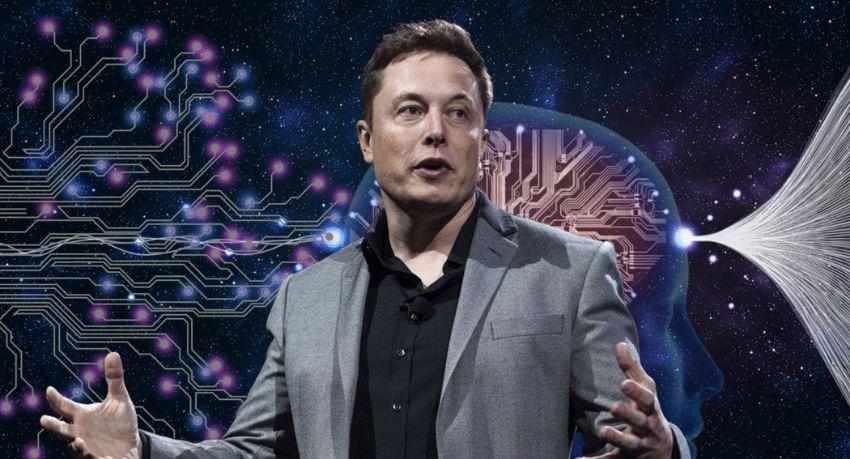
SpaceX founder Elon Musk has called for the world’s leading artificial intelligence companies to begin testing one another’s models before release, saying it had become clear that AI “can be very dangerous” and that the industry cannot be trusted to mark its own work.
Companies that run only internal safety evaluations end up “grading their own homework,” Musk said in remarks reported by NewsFirst, arguing that rivals have both the expertise and the incentive to find weaknesses a developer would miss in its own system. He proposed that firms subject each other’s models to security testing on isolated test systems, with all activity logged to prevent intellectual property from being extracted.
Governments may eventually legislate or build dedicated regulators, Musk said, but peer testing is something the industry could adopt immediately. He added that any durable framework must be acceptable to China as well as to Western states — otherwise countries that restrain themselves simply fall behind.
On the warnings coming from inside rival firms, he was blunt: “When a lot of people from Anthropic and OpenAI are telling you that their models are very dangerous, I think we should believe them.”
The White House says the opposite
Musk’s proposal lands against an unusually direct rejection from the US president. Donald Trump dismissed calls for tighter AI controls as “a SICK conspiracy going on against AI and data centers,” writing that “the only control or ‘guardrails’ that AI needs is a STRONG AND SMART (High IQ!) PRESIDENT,” Al Jazeera reported.
He went further by telephone. Calling Nvidia chief executive Jensen Huang while Huang was on stage at an AI conference in California, Trump told the audience over speakerphone: “It’s a hoax. The robots are not going to be taking over the world. That’s not going to happen.”
Asked separately whether the industry should be more heavily regulated, Trump framed it as a race: “We’re the most sophisticated country in the world, and frankly I want to keep it that way because whoever wins AI wins,” he told reporters, according to CNN.
Markets priced in a slowdown
Investors took the industry’s own warnings more seriously than the president did. AI-linked stocks fell on Monday after Anthropic chief executive Dario Amodei published an essay titled We Must Pace the Frontier, arguing that “building too fast is reckless” and that within six to 12 months AI agents could be capable of taking over the entire internet and causing hundreds of billions of dollars in damage.
Nvidia closed down 3.3%, with AMD off 4% and Micron and SanDisk down 5%, Hiru News reported. The Philadelphia semiconductor index sank almost 6% — its worst day since early July. In Asia, Japan’s SoftBank and South Korea’s Kospi both fell sharply; in Europe, Dutch chip-equipment maker ASML dropped 6%. Shares in businesses seen as threatened by AI moved the other way, with advertising group WPP and analytics firm Relx both up 5% in London.
The figures quoted across outlets differ because they were taken at different points in the session rather than because the outlets disagree: SoftBank fell as much as 13.2% intraday but closed nearly 11% lower, and the Nasdaq Composite was down 1.3% in the morning before finishing the day off just 0.56%.
Amodei’s call was endorsed by Musk, OpenAI’s Sam Altman and Google DeepMind’s Demis Hassabis. Altman also said OpenAI would not list publicly in 2026, calling it “an ill-advised moment to go public” given safety concerns. Not everyone expects the restraint to hold: Deutsche Bank’s Jim Reid said it was “difficult to imagine firms voluntarily stepping back while rivals continue to push ahead.”
The chorus is widening
Two further interventions landed the same day. Bill Gates, until recently an AI optimist, told Reuters that “governments are way behind on this one” and that he did not think “any government is nearly as deep on this as they have to be,” citing risks to jobs, security and addiction to AI companions. His foundation nonetheless plans to spend at least US$1 billion over two years widening access to the technology, and Gates said he has raised his concerns with Trump and aims to meet China’s President Xi Jinping later this year.
Separately, Bilal Chughtai, who worked on AGI safety and alignment research at Google DeepMind until July, wrote on X that he “earnestly believe[s] that AI has the potential to kill us all, and that we might be running out of time to avoid this outcome.” He is the second safety researcher to resign with such a warning in a week, after Anthropic’s Jacob Coxon. Anthropic co-founder Jack Clark has told the BBC a third-party-triggered “kill switch” may be necessary — a mechanism the UK government rejected days earlier.
Musk’s proposal is narrower than either: peer review among competitors is a form of self-regulation, and it is precisely the category that UN High Commissioner for Human Rights Volker Türk, writing to ten frontier developers on Monday, called “nowhere near sufficient.”
Not reported
NewsFirst does not say where, when or on what platform Musk made his remarks, and gives no response from any company he proposes should be testing rivals’ models. The specific security incident he referred to — autonomous agents overwhelming security barriers to gain elevated access — is not identified. No mechanism, timetable or participant list exists for the peer-testing scheme; it is a proposal, not an agreement.
Outlets also describe Musk’s AI venture inconsistently, NewsFirst identifying him only as “the SpaceX founder” while CNN and the Guardian refer to SpaceXAI. There is no reaction from the Sri Lankan government, which is developing its own AI governance framework but has no frontier AI industry. Ada Derana carried the Trump story but its site returned a CloudFront block across the whole domain and could not be used as a source.
Sources
- ‘AI Can Be Very Dangerous’: Musk Proposes AI Giants Test Each Other’s Models — NewsFirst, September 15
- AI-linked stocks slide after tech bosses call for slowdown in ‘reckless’ development — Hiru News, September 15
- Trump says calls for more control on AI are a ‘sick conspiracy’ — Al Jazeera, September 14
- AI stocks slide after top industry CEOs call for slowdown of technology’s development — CNN, September 14
- Governments worldwide are way behind on AI, says Bill Gates — Hiru News, September 15
- Ex-Google DeepMind researcher warns AI could ‘kill all humans’ — Hiru News, September 15