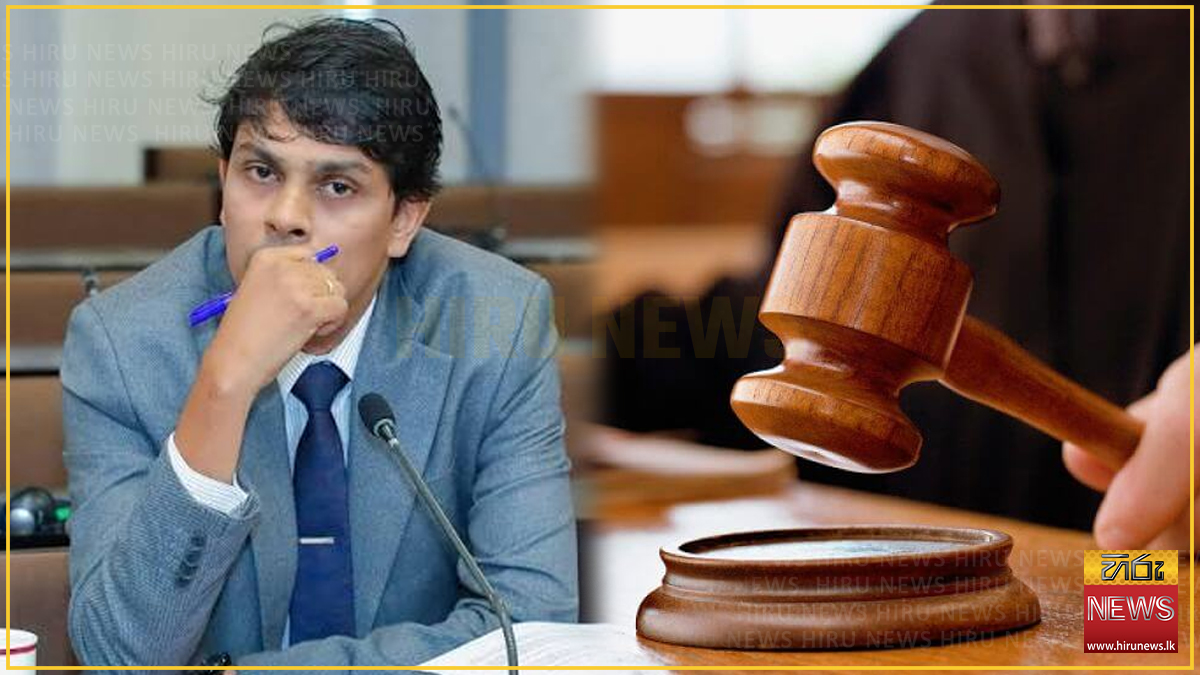
The Supreme Court ruled on Tuesday that former Inspector General of Police Deshabandu Tennakoon, former Deputy Inspector General Palitha Siriwardena and Chief Inspector Induka Silva acted in accordance with a political agenda and violated the fundamental rights of two of the country’s most senior former detectives, NewsFirst reported.
The petitioners are Ravi Seneviratne, the former Senior Deputy Inspector General in charge of the Criminal Investigation Department, and Shani Abeysekara, the former CID Director.
What the court decided
The ruling was delivered in a fundamental rights application in which Seneviratne and Abeysekara sought an order preventing Seneviratne’s arrest. The investigation that threatened the arrest had originated in a complaint lodged with the CID by Siriwardena and a group of police officers, alleging links between the two officers and the 2019 Easter Sunday attacks.
The court held that the actions of Tennakoon, Siriwardena and Silva had resulted in a violation of the petitioners’ fundamental rights.
It went further on the complaint itself, ordering that no further action be taken on Siriwardena’s CID complaint — finding that it had been pursued on the basis of political motives.
That is the more consequential half of the order. A finding of rights violation addresses what was done to the two officers; directing that the complaint go no further closes the investigative file that had hung over them.
The long docket behind it
Both men occupy senior positions in the present administration and both have been the subject of repeated legal and political pressure since 2020.
Seneviratne serves as Secretary to the Ministry of Public Security, the civil servant overseeing the police and the CID. Abeysekara was promoted to Deputy Inspector General in August, backdated to 2020, after an Administrative Appeals Tribunal cleared the way.
The Easter-attack allegation against them has been pressed publicly as well as through the police complaint. Pivithuru Hela Urumaya leader Udaya Gammanpila argued on 1 August that the pair should face criminal negligence charges, on the basis that the CID’s investigations into Zahran Hashim-linked crimes gave them earlier knowledge of the plot than the officials convicted over it. Neither has been charged in connection with the attacks.
Tennakoon, for his part, is facing indictment by the Attorney General over the 2022 attack on Aragalaya protesters at Galle Face.
This ruling should not be confused with the separate Abeysekara petitions over his 2020 arrest by the Colombo Crime Division in the Mohammed Siyam murder investigation, on which the Supreme Court reserved judgment in May. That docket remains pending.
Update (September 15): the bench is named and compensation is ordered
A fuller NewsFirst account published at 5.10pm, and a Daily Mirror report filed the same morning, answer the two questions the first filing left open — who decided the case, and what the respondents must pay.
The judgment was delivered by Justice Gihan Kulatunga, with the concurrence of Chief Justice Preethi Padman Surasena and Justice Achala Wengappuli, NewsFirst reported.
The court ordered Palitha Siriwardena to pay Rs. 50,000 to each petitioner and Induka Silva to pay Rs. 10,000 to each — Rs. 120,000 in all, payable personally by two of the three respondents. No compensation was ordered against Deshabandu Tennakoon, although the court found his actions contributed to the violation.
Justice Kulatunga held that Siriwardena had acted maliciously in lodging the CID complaint and had done so on political motives, and that the investigations which followed violated the petitioners’ rights. The ruling identifies the three by their position on the record: Silva as second respondent, Siriwardena as seventh, Tennakoon as eighth.
The court also ordered that the petitioners not be arrested and that no further investigations be conducted against them on the complaint.
Where the complaint came from
The petitioners’ own account, set out in the NewsFirst report, traces the allegation to a specific event: the inaugural meeting in Maharagama in 2023 of a retired police collective affiliated with the National People’s Power. A group including Siriwardena — then a serving DIG — and then Assistant Superintendent Senaka Kumarasinghe held a media briefing at which, the petitioners said, false and malicious allegations were levelled against them, accusing them of deliberately suppressing intelligence warnings about the Easter Sunday attacks despite prior knowledge.
The CID complaint itself was made during the last presidential election period, NewsFirst says, by a group of officers led by Siriwardena. Neither outlet gives the complaint’s date.
The petitioners argued the complaint was fabricated for political purposes and exposed them to arrest and detention under the Prevention of Terrorism Act — which is what the interim relief they sought was directed against, and what the court has now granted.
Kumarasinghe is named in the petitioners’ account of the 2023 briefing but is not among the respondents against whom the court made orders.
A note on rank. NewsFirst calls Induka Silva “Police Inspector” in its account of the finding and “former Chief Police Inspector” three paragraphs later in the compensation order; the earlier report called him Chief Inspector. The outlet does not reconcile its own two descriptions. The Daily Mirror avoids the question, referring only to “two other police officers.” Its report also gives Ravi Seneviratne’s standing more fully than NewsFirst — retired Senior DIG and Secretary to the Ministry of Public Security.
Not reported
Neither outlet gives an account of what the respondents argued, or any reaction from Tennakoon, Siriwardena or Silva. Neither explains why no compensation was ordered against Tennakoon, the most senior of the three and the only one found to have acted on a political agenda in the first report. Neither says what becomes of Kumarasinghe or the other officers who joined Siriwardena in the complaint, whether any disciplinary process follows the finding of malice, or whether the ruling affects any other proceeding arising from the same complaint. Neither states the date of the complaint, and neither reports whether the respondents intend to seek any review.