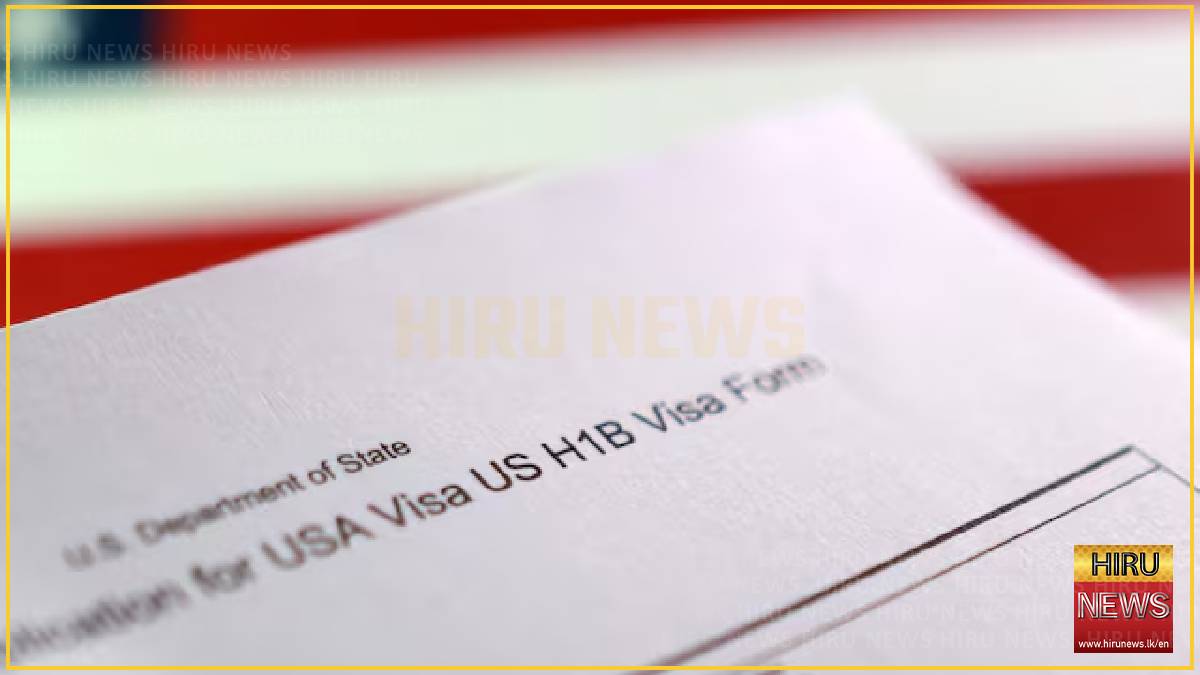
US President Donald Trump has extended by another year the executive order imposing a $100,000 fee on H-1B non-immigrant visas, the White House said on Friday, Hiru News reported, carrying a Reuters report.
The extension matters because of the deadline it clears. Trump’s initial order, first released in September 2025, was set to expire this month. Rather than lapse, it now runs a further year.
Extended, but still not collectable
The order being extended is not the same thing as the fee being charged. Courts have stopped the government from collecting it.
A Boston-based appeals court is reviewing a June decision in which a federal judge deemed the higher fee illegal and blocked the administration from collecting it. A second court is considering whether a judge properly rejected a separate challenge brought by the US Chamber of Commerce, the largest US business lobbying group.
So the position today is an order kept alive on paper while the money it authorises remains judicially frozen. Extending it preserves the administration’s ability to charge the fee if the appeals succeed — without the order, a favourable ruling would have nothing left to act on.
This also runs alongside a separate track: in August the Department of Homeland Security proposed a regulation to make a fee of $103,265 permanent, opening a 30-day comment period. A rule made through rulemaking would not depend on an executive order at all.
What the fee would replace
H-1B visas let US employers hire foreign workers trained in specialty fields. Established by Congress in 1990, the programme issues 65,000 visas a year plus 20,000 for applicants with advanced degrees, valid for three to six years. Obtaining one has typically cost between $2,000 and $5,000 — the proposed charge is at least twenty times that.
The original order carried two significant carve-outs that limited its reach: it did not apply to visas granted to foreign citizens already in the United States on student visas — who make up a large share of new H-1B recipients — nor to renewals of current visas.
Why it reaches Sri Lanka
The visas are, in Reuters’ description, especially critical for technology companies recruiting from India and China, and the programme is a standard route for South Asian IT and engineering graduates, including Sri Lankans, moving into US employment.
The second-order effect may matter more than the fee itself. Changes to how applicants are scrutinised and processed have already altered corporate hiring and expansion plans, with some of the largest H-1B users — among them Google parent Alphabet — moving to increase operations in India instead. Work that would once have been done by staff relocated to the United States is being placed in the region.
Business groups argue the visas address a shortage of qualified US workers in some industries. Critics say companies use them to hire lower-paid foreign staff in place of Americans.
Not reported
Reuters does not give the new expiry date, say when the Boston appeal will be heard, or indicate what happens to the extended order if the proposed $103,265 rule is finalised first. It does not state how many H-1B holders are Sri Lankan nationals.
Source