A Rs. 52 million project funded by the Mahaweli Authority is under way to clear silt and invasive aquatic plants from 15 tanks in the Mahaweli System H area of the Rajarata, Hiru News reported.
The tanks include Maha Illuppallama, Thalawa and Katiyawa. Silting and weed growth are described as a major constraint on agriculture in the region.
The deadline is the season, not a date
The stated objective is to finish all restoration work before the upcoming Maha cultivation season, so the tanks can hold more water when the rains arrive.
That is the operative constraint. The Maha season is the main cultivation season in Sri Lanka’s dry zone, planted on north-east monsoon rains from around October. A desilting programme that misses it delivers nothing until the following year — the storage has to be in place before the water comes, not after.
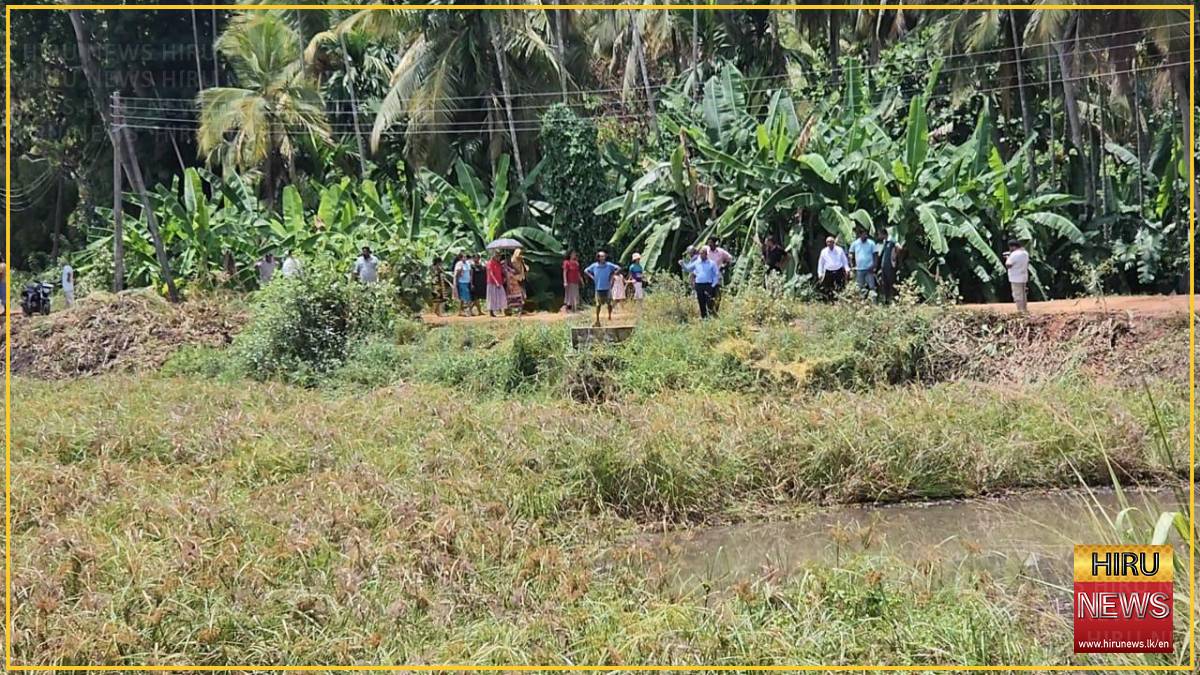
Minister of Housing, Construction and Water Supply Dr. Susil Ranasinghe visited Hiripitiyagama in Maha Illuppallama on Saturday (19) to inspect work at the Kalakarambewa tank, which is being renovated at a cost of Rs. 5 million.
The named tanks
Beyond the three headline sites, the restoration list includes Bendiwewa, Kaduruweagama, Kuda Meegasagama, Maha Meegasagama, Kele Siyambalawewa, Brahmanayagama and Nabadawewa.
That accounts for ten of the fifteen tanks. Hiru does not name the remaining five.
The work is being carried out with community participation through farmer organisations rather than solely by contractors.
What the numbers imply
Rs. 52 million across 15 tanks averages about Rs. 3.5 million per tank. Kalakarambewa, at Rs. 5 million, is therefore an above-average site — roughly 10% of the total budget on one tank, which suggests the allocations are not uniform and that some tanks require substantially more work than others.
These are small village tanks, not major reservoirs. The sums involved are modest by irrigation-infrastructure standards, which is consistent with desilting and weed clearance rather than structural rehabilitation of bunds or sluices.
Not reported
Hiru does not say how much storage capacity the programme is expected to recover, in acre-feet or as a percentage — the figure that would show whether Rs. 52 million is good value. Nor does it give a completion date, or say how much of the work is already done.
The remaining five tanks are not named. It is not stated how many farming families or how much cultivated acreage depend on the fifteen tanks, what the farmer organisations contribute (labour, cash, or both), or how the tanks were selected from the many in System H.
Nothing is said about where the removed silt goes, or whether it is being returned to fields as topsoil — a common practice in Sri Lankan tank restoration. The invasive aquatic plants are not identified by species.
It is also unstated whether this programme connects to the drought that has affected the North Central Province: as of Saturday, 169,071 people across ten districts were receiving drinking water relief. Anuradhapura and Matale are among the districts on that register, and System H lies in the same dry zone.