The Bar Association of Sri Lanka (BASL) and the Law Council of Australia have signed a Memorandum of Understanding, Hiru News reported.
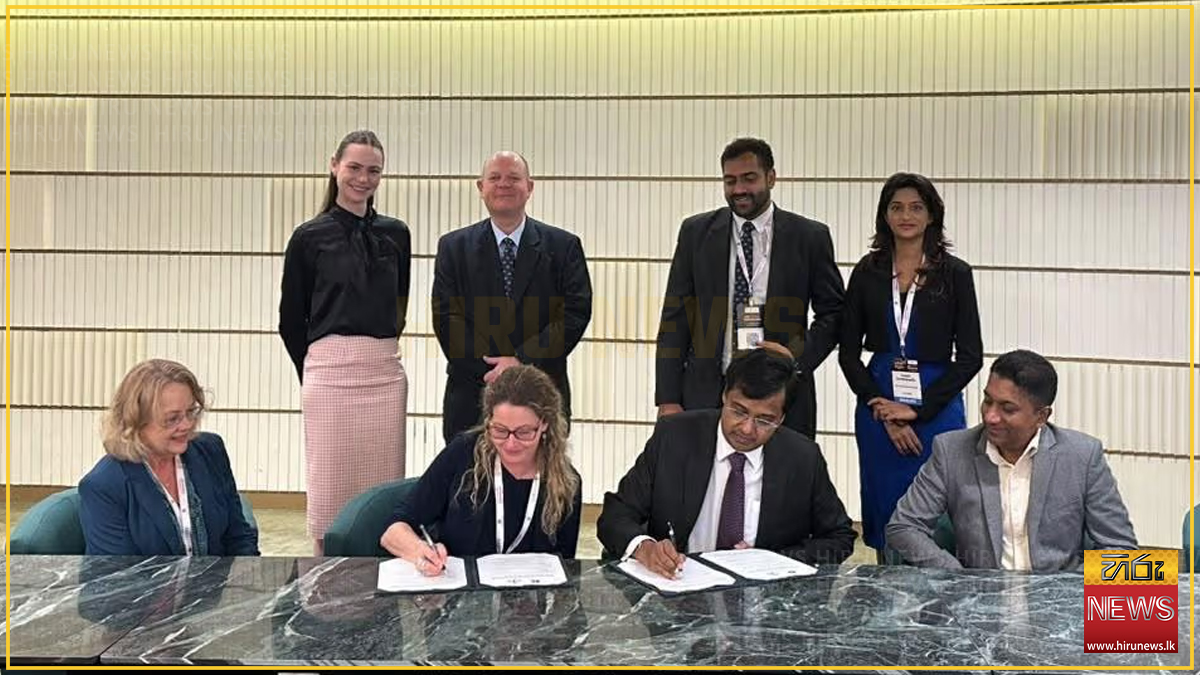
The signing took place on the sidelines of the 39th LAWASIA International Conference in Seoul, Republic of Korea. BASL President Rajeev Amarasuriya and Law Council of Australia President Tania Wolff signed for their respective bodies.
The photograph filed with the report shows the two presidents signing at a conference table with four standing witnesses wearing LAWASIA delegate lanyards — confirming the conference-sidelines setting.
The Australian counterparty
The Law Council of Australia, established in 1933 and based in Canberra, is the principal national body representing the Australian legal profession. It represents more than 107,000 Australian lawyers through its constituent state and territory law societies and bar associations, together with Law Firms Australia.
Its stated remit — advocating for legal rights nationally and internationally, and working on the administration of justice, access to justice and the promotion of the rule of law — closely mirrors the BASL’s own.
The BASL says the MOU will strengthen bilateral legal relations between Sri Lanka and Australia.
Context the timing supplies
The agreement is signed while the BASL is an active participant in Sri Lanka’s domestic debate over judicial independence. The association has been a recurring actor in this year’s coverage of that question, including its insistence on a complete recording of its meeting with the President in August, and Parliament this week takes up the 22nd Amendment and the Judicature (Amendment) Bill together.
Neither the BASL statement nor Hiru’s report connects the MOU to that debate, and no such link is asserted here. But a formal tie to a foreign bar whose stated purpose includes promoting the rule of law is signed at a moment when the domestic rule-of-law question is live.
Not reported
Hiru’s filing does not say what the MOU actually commits either side to. The substance — whether it covers training exchanges, mutual recognition of qualifications, continuing legal education, joint advocacy, or cooperation on human rights and rule-of-law matters — is absent.
Also unstated: the duration of the agreement, whether it carries any funding, whether the text will be published, when the 39th LAWASIA conference runs and who else attended from Sri Lanka, and whether the BASL has signed comparable agreements with other national bars.